Quick answer
Spend four nights in Tokyo, two in Kyoto and one in Osaka. Days 1–3 cover Shinjuku, Asakusa, Harajuku, Shibuya and teamLab; day 4 is a Mount Fuji trip; day 5 takes the shinkansen to Kyoto; day 6 covers Arashiyama, Kinkaku-ji and Fushimi Inari; day 7 is Nara and Osaka; and day 8 you fly home from Kansai.
The route
- Tokyo
- Mount Fuji (day trip)
- Kyoto
- Nara
- Osaka
Day-by-day plan
- 1
Day 1
Arrive in Tokyo, evening in Shinjuku
Morning: Land at Haneda or Narita. Get a Welcome Suica card or add Suica to your phone, then take the train to Shinjuku.
Afternoon: Check in and recover from the flight. Shinjuku Gyoen garden if you have energy.
Evening: The free 45th-floor deck at the Tokyo Metropolitan Government Building, then Omoide Yokocho's lanes and the Kabukicho neon.
Stay: Shinjuku
- 2
Day 2
Asakusa, Skytree and Akihabara
Morning: Senso-ji at 8 am, before the crowds, then Nakamise street.
Afternoon: Tokyo Skytree or a Sumida River boat, then Akihabara's electronics and anime shops.
Evening: Ginza for dinner and window shopping.
Stay: Shinjuku
- 3
Day 3
Meiji Jingu, Harajuku, teamLab and Shibuya
Morning: Meiji Jingu, Takeshita Street and Omotesando.
Afternoon: teamLab Planets in Toyosu on a timed ticket.
Evening: Shibuya Crossing, Shibuya Sky at sunset, and dinner in Shibuya.
Stay: Shinjuku
Book Shibuya Sky's sunset slot three to four weeks ahead.
- 4
Day 4
Mount Fuji and Lake Kawaguchiko
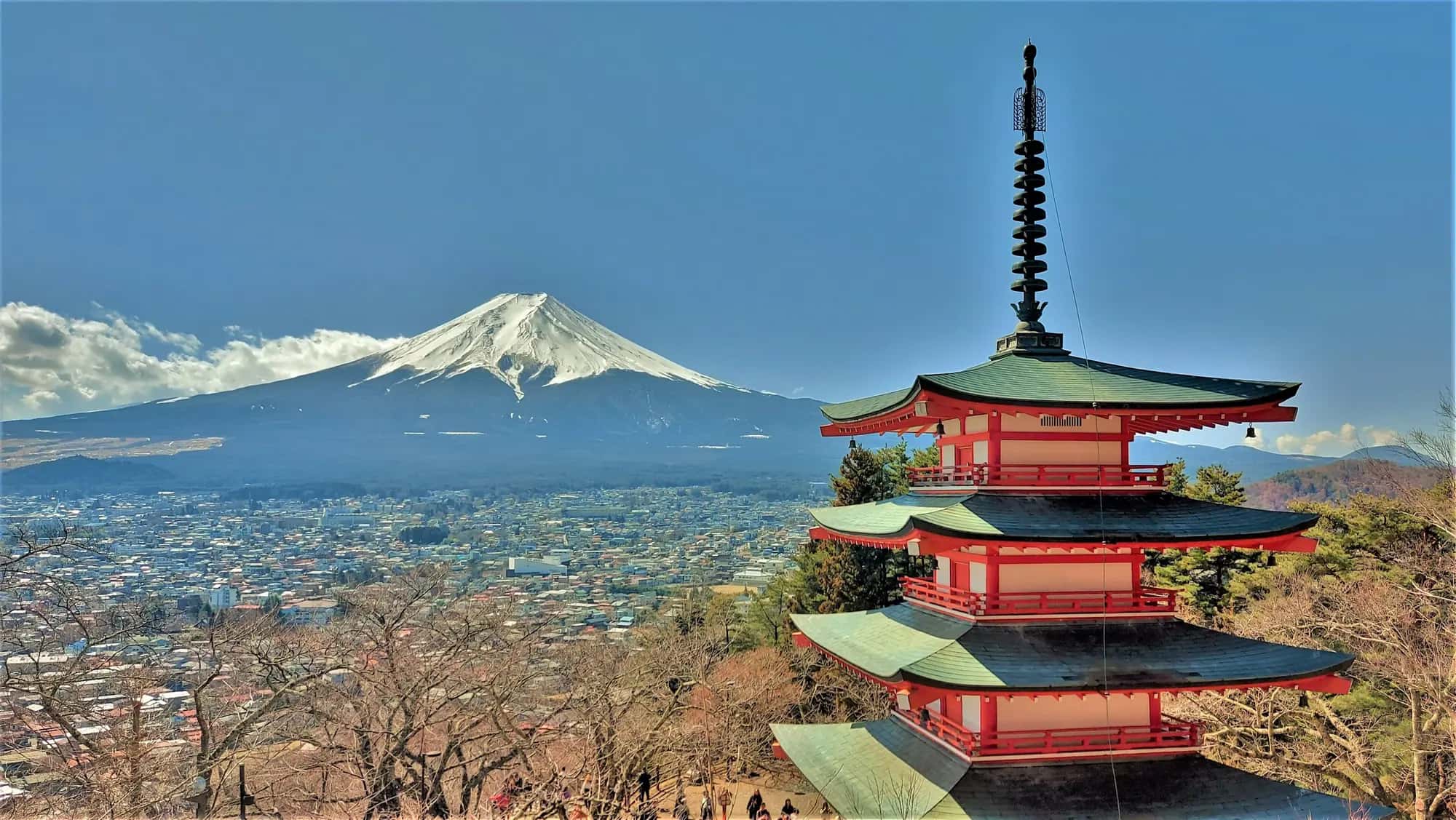
Morning: Highway bus from Shinjuku (about two hours) or a guided tour. Chureito Pagoda first.
Afternoon: Lake Kawaguchi, the Mount Tenjo ropeway and the springs at Oshino Hakkai.
Evening: Back in Tokyo. Arrange luggage forwarding to your Kyoto hotel at the front desk.
Stay: Shinjuku
If the forecast shows cloud over Fuji, swap this with day 2, or go to Hakone instead.
- 5
Day 5
Shinkansen to Kyoto, Higashiyama and Gion
Morning: Nozomi from Tokyo or Shinagawa to Kyoto, about 2 hours 15 minutes. Sit on the right side (seat E) for a chance of seeing Fuji.
Afternoon: Kiyomizu-dera, then the Sannenzaka and Ninenzaka lanes down to Yasaka Shrine.
Evening: Gion and Pontocho at dusk.
Stay: Kyoto (Kyoto Station or Shijo area)
- 6
Day 6
Arashiyama, Kinkaku-ji and Fushimi Inari
Morning: Arashiyama Bamboo Grove by 7:30 am, Tenryu-ji garden and the Togetsukyo Bridge.
Afternoon: Kinkaku-ji, then Fushimi Inari in the late afternoon; the gates are open 24 hours and quieter as the light fades.
Evening: A shojin ryori (Buddhist vegetarian) dinner, or ramen near Kyoto Station.
Stay: Kyoto (Kyoto Station or Shijo area)
- 7
Day 7
Nara, then on to Osaka
Morning: Train to Nara (about 45 minutes): the deer park, Todai-ji's great Buddha and Kasuga Taisha.
Afternoon: Train to Osaka (about 50 minutes), check in, and walk Osaka Castle park.
Evening: Dotonbori and Shinsekai for street food and neon.
Stay: Osaka (Namba or Umeda)
Use station coin lockers in Nara if your bags didn't go ahead to Osaka.
- 8
Day 8
Osaka morning and flight home
Morning: Kuromon Market or the Umeda Sky Building's floating garden deck.
Afternoon: Train to Kansai Airport (40–75 minutes depending on the service).
Evening: Fly home, usually with one stop.
Flying non-stop from Tokyo? Take the shinkansen back this morning (about 2.5 hours) instead.
How should you plan 8 days in Japan?
This route follows the golden route most first-timers take, without the rush: four nights in Tokyo with a Mount Fuji day, two in Kyoto, and a last night in Osaka with Nara on the way. You change hotels only twice, and both moves are short train rides.
Fly into Tokyo and out of Osaka's Kansai Airport. On one-stop airlines, such open-jaw tickets usually cost about the same as a return. If you're on a non-stop flight from Delhi or Mumbai, take the shinkansen back to Tokyo on the last morning instead.
Do you need a Japan Rail Pass for this route?
No. Point-to-point tickets for Tokyo–Kyoto and the local trains to Nara and Osaka cost far less than the 7-day pass, which is ¥50,000 (about ₹29,000) on the official site. Use a Suica card for city trains and buy the shinkansen ticket at the station or online a day ahead. The pass only pays off if you add Hiroshima.
What does this itinerary cost?
The mid-range land cost starts at about ₹90,000 per person, twin sharing, for seven nights in well-located 3-star and 4-star hotels, the shinkansen, the Fuji day trip, local transport and entry fees. Meals add ₹2,500–4,000 per person a day. Flights from India and the visa are extra. See the Japan trip cost breakdown.
Forward big suitcases from Tokyo to Kyoto with a luggage service, about ¥2,500–3,500 per bag, and travel with a day bag. Japanese stations have long stairs and crowded platforms.
Check the best time to visit Japan, the Japan visa guide and, for vegetarians, the Japan food guide before you book.
Frequently asked questions
Is 8 days enough for Japan?
Should I stay in Kyoto or Osaka?
Can vegetarians follow this Japan itinerary?
How we checked this page
Last reviewed
Written and fact-checked by the Elitech Travels editorial desk in New Delhi, drawing on our consultants' day-to-day booking work and the official sources below. Rules, fares and fees change — always confirm anything critical with the issuing authority before you travel. Our editorial policy.