Quick answer
On a first trip, focus on Tokyo, Kyoto and Osaka. In Tokyo, see Senso-ji, Shibuya Crossing and a sky deck at sunset; in Kyoto, Fushimi Inari, Kiyomizu-dera and Arashiyama; in Osaka, Dotonbori by night. Add a Mount Fuji or Hakone day trip and half a day in Nara. Most temples cost under ₹500; trains and ticketed experiences are the big costs.
14 things worth your time in Japan
- 01
Senso-ji and Asakusa
LandmarkTokyo's oldest temple, reached through the Kaminarimon gate and the snack and souvenir stalls of Nakamise street.
2 hoursFreeGo before 8 am or after dark; the grounds stay open and are lit up at night.
- 02
Shibuya Crossing and Shibuya Sky
LandmarkThe world's busiest pedestrian crossing, then an open-air rooftop deck above it with views to Mount Fuji on clear days.
2–3 hoursShibuya Sky about ₹1,500–2,000 (¥2,500–3,400)Sunset slots sell out three to four weeks ahead; book as soon as your dates are fixed.
- 03
Meiji Jingu and Harajuku
LandmarkA shrine in 70 hectares of forest, a five-minute walk from the youth fashion and crepe stands of Takeshita Street.
2 hoursFree - 04
teamLab Planets
ExperienceAn immersive digital art museum in Toyosu where you walk barefoot through rooms of light, mirrors and knee-deep water.
2 hoursAbout ₹2,100–2,600 (¥3,600–4,500)Wear shorts or trousers that roll up above the knee. Tickets are timed and sell out on weekends.
- 05
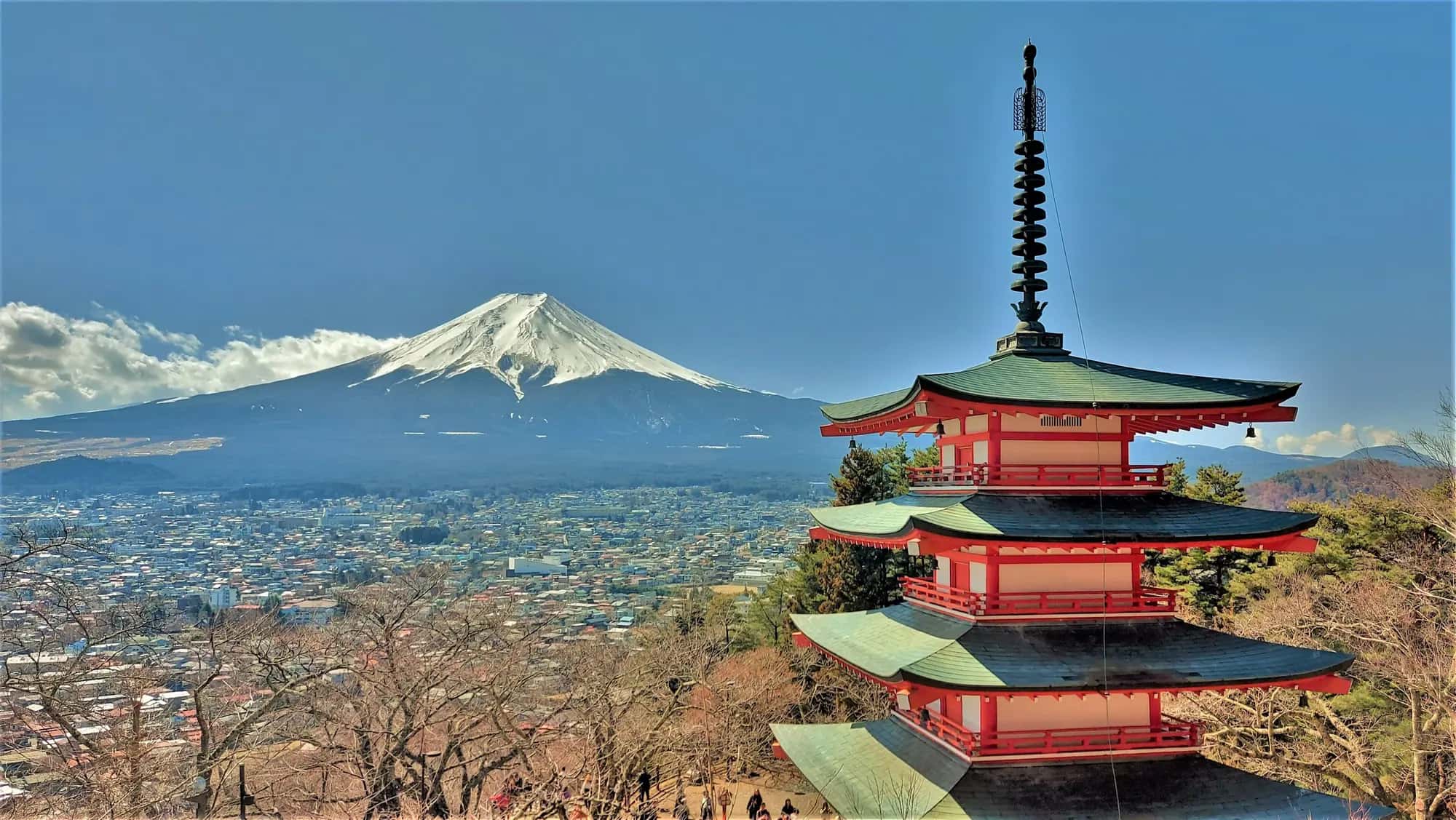
Mount Fuji and Lake Kawaguchiko
Day tripThe Chureito Pagoda viewpoint, lakeside walks and the ropeway to Mount Tenjo, two hours from Shinjuku.
Full dayHighway bus about ₹2,500 (¥4,400) return; guided tours ₹6,000–9,000Fuji hides behind cloud on many days, especially June to August. Check the live cameras the night before and keep this day flexible.
- 06
Hakone
Day tripA loop of mountain train, ropeway over the sulphur vents of Owakudani and a boat across Lake Ashi, with hot-spring ryokans for an overnight stay.
Full day or overnightHakone Free Pass about ₹3,500–4,000 (¥6,000–7,000) from ShinjukuMost onsen are gender-separated and require bathing without swimwear. Private onsen rooms solve this for families and couples.
- 07
Fushimi Inari Taisha
LandmarkThousands of vermilion torii gates climbing Mount Inari behind Kyoto, open 24 hours.
2–3 hoursFreeThe crowds thin after the first 20 minutes of climbing. Go before 8 am for empty tunnels.
- 08
Kiyomizu-dera and Higashiyama
LandmarkA wooden temple stage over a wooded slope, then the stone lanes of Sannenzaka and Ninenzaka down to Gion at dusk.
Half dayAbout ₹230–300 (¥400–500)Some of Gion's private lanes ban photography and entry. Never block or photograph geiko without asking.
- 09
Arashiyama Bamboo Grove and Tenryu-ji
NatureA short path through tall bamboo beside a Zen temple garden, with river walks and the monkey park across the bridge.
Half dayGrove free; Tenryu-ji garden about ₹300 (¥500)By 9:30 am the grove is shoulder to shoulder. Take the first train and arrive by 7:30.
- 10
Kinkaku-ji (Golden Pavilion)
LandmarkA gold-leaf pavilion reflected in a pond, one of Japan's most photographed sights.
1 hourAbout ₹300 (¥500) - 11
Nara Park and Todai-ji
Day tripFree-roaming deer that bow for crackers, and a 15 m bronze Buddha inside one of the largest wooden halls in the world. Under an hour from Kyoto or Osaka.
Half dayTodai-ji about ₹460 (¥800); deer crackers about ₹120The deer nip when they see food. Hold crackers high and give them away quickly.
- 12
Dotonbori and Osaka Castle
FoodNeon canal-side streets, the Glico running man sign and Osaka's street food. The castle park is lovely in blossom season.
Evening, plus 2 hours for the castleFree to walk; castle museum about ₹350–700 (¥600–1,200) - 13
Universal Studios Japan
ExperienceSuper Nintendo World and the Wizarding World of Harry Potter are the main draws for families and teenagers.
Full dayAbout ₹5,000–6,800 (¥8,600–11,800) depending on dateSuper Nintendo World needs a timed entry ticket on busy days. Get it in the app the moment you enter, or buy an Express Pass.
- 14
Hiroshima and Miyajima
Day tripThe Peace Memorial Park and museum, then the floating torii gate of Itsukushima Shrine on Miyajima island.
Full day from Kyoto or OsakaPeace Memorial Museum about ₹120 (¥200); Miyajima visitor tax ¥100This is the trip that makes a Japan Rail Pass worthwhile. Without one, the return shinkansen from Kyoto costs about ₹12,000.
What should first-timers do in Japan?
Japan rewards a simple route: Tokyo for three or four days, Kyoto for two or three, and Osaka for one or two, with Nara and either Mount Fuji or Hakone as day trips. Trains make this easy. The Nozomi bullet train reaches Kyoto from Tokyo in about 2 hours 15 minutes, and sights are well signed in English.
Entry fees are low. Most temples charge ¥400–800 (₹230–460), and many shrines are free. The real costs are trains, ticketed experiences such as teamLab and Universal Studios, and food.
Is the Japan Rail Pass worth it?
For the classic Tokyo–Kyoto–Osaka loop, usually not. The 7-day pass costs ¥50,000 (about ₹29,000) on the official site, and from October 2026 ¥53,000 through travel agents. A one-way Tokyo–Kyoto Nozomi ticket costs about ¥14,000, so you need extra long journeys, such as Hiroshima, before the pass pays off. Buy point-to-point shinkansen tickets and use a Suica or ICOCA card for city trains.
How to beat the crowds
- Start early. Fushimi Inari at 7 am and Arashiyama at 7:30 am feel like different places from the same spots at 11 am.
- Book timed entries ahead. Shibuya Sky sunset slots, teamLab and the Ghibli Museum sell out weeks in advance.
- Use luggage forwarding (takkyubin) between cities, about ¥2,500–3,500 per bag, so you don't drag suitcases through stations.
On the Tokyo–Osaka shinkansen, suitcases with total dimensions over 160 cm need a reserved oversized-luggage seat. Book one or forward your bags.
Plan your dates with the best time to visit Japan, follow our 8-day Japan itinerary and check the Japan trip cost. Vegetarians should read the Japan food guide before landing.
Frequently asked questions
How many days do you need in Japan?
Is Japan expensive for Indian tourists?
Can you see Mount Fuji on a day trip from Tokyo?
How we checked this page
Last reviewed
Written and fact-checked by the Elitech Travels editorial desk in New Delhi, drawing on our consultants' day-to-day booking work and the official sources below. Rules, fares and fees change — always confirm anything critical with the issuing authority before you travel. Our editorial policy.