Our verdict
Pick Kenya for a first safari: non-stop flights from Mumbai, the Masai Mara within a short flight or drive of Nairobi, dense big-cat sightings, and 5 nights from about ₹1.1 lakh on land. Pick Tanzania for a bigger, longer wilderness trip — the Serengeti, Ngorongoro Crater, January–February calving, Kilimanjaro and a Zanzibar beach finish — budgeting about ₹1.6 lakh on land for 6 nights.
Side by side
| Factor | Kenya | Tanzania |
|---|---|---|
| Entry for Indians | Electronic Travel Authorisation, about USD 30–35 | E-visa, USD 50 (about ₹4,400); allow up to 10 working days |
| Flights from India | Non-stop Mumbai–Nairobi, about 6 h | Kilimanjaro usually one-stop; non-stop Mumbai–Dar es Salaam |
| Starting trip cost (per person) | 5N land from ₹1.1 lakh; about ₹1.6 lakh+ with flights | 6N land from ₹1.6 lakh; about ₹2.2 lakh+ with flights |
| Best months | July to October for river crossings; January–February dry | June to October; January–February for calving |
| Wildlife viewing | Compact Masai Mara; big cats found quickly | Vast Serengeti plus Ngorongoro Crater's dense wildlife |
| Crowds | Busy crossing points in August | More space; fewer vehicles at sightings |
| Park fees | Mara fee about USD 100–200 per day by season | Serengeti and Ngorongoro fees plus nightly concession charges |
| Beach add-on | Diani Beach near Mombasa | Zanzibar: Stone Town, spice farms, white-sand east coast |
| Vegetarian food | Nairobi's Indian community; lodges handle veg and Jain requests | Indian restaurants in Arusha and Zanzibar; remote camps need notice |
| Family-friendliness | Shorter drives; more lodges take children | Long drives; some camps set minimum ages |
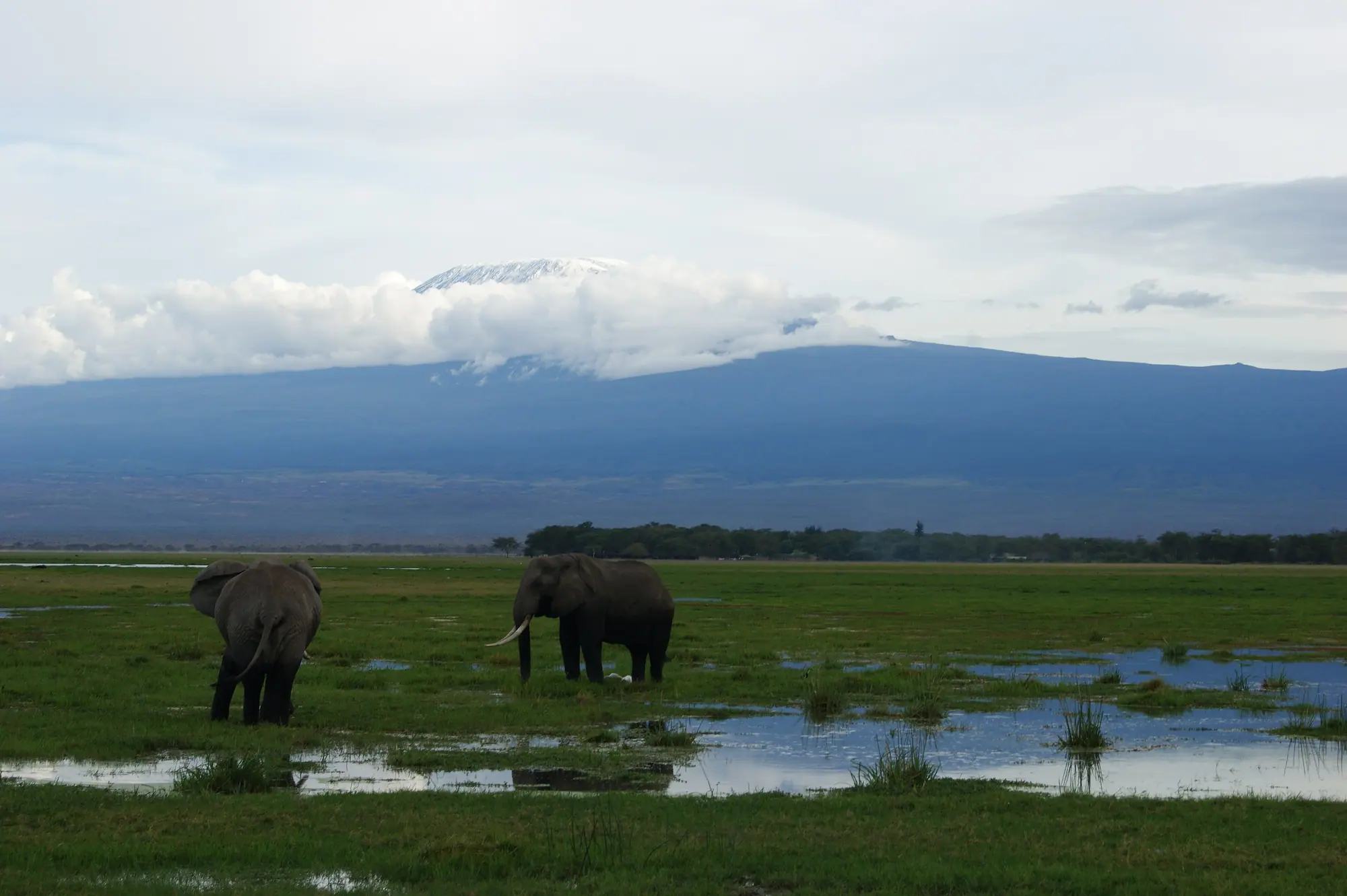
| Kilimanjaro | Views of the mountain from Amboseli | The climb itself, usually 6–8 days |
Which one is for you?
Choose Kenya if…
- It is your first safari and you have 5–6 nights
- You want a non-stop flight and short drives
- You are travelling with children or senior citizens
- Your budget is closer to ₹1.6 lakh than ₹2.2 lakh with flights
Choose Tanzania if…
- You want the Serengeti and Ngorongoro Crater in one trip
- You are travelling in January–February for the calving season
- You want to finish with beach days in Zanzibar
- Climbing Kilimanjaro is part of the plan
Which is better for a first safari?
Kenya, for most Indian travellers. It is closer, simpler and cheaper, and the Masai Mara is one of the best places in Africa to see lions, cheetahs and leopards in a few days. Tanzania suits a longer, more ambitious trip: the Serengeti and Ngorongoro Crater, the chance to climb Kilimanjaro, and a beach finish in Zanzibar.
Entry and health rules
Kenya requires an Electronic Travel Authorisation (eTA), applied for online for about USD 30–35 (₹2,600–3,100) and usually issued within a few working days. Tanzania issues e-visas for USD 50 (about ₹4,400); allow up to 10 working days. The East Africa Tourist Visa covers Kenya, Uganda and Rwanda but not Tanzania, so a combined trip needs both. See the Kenya visa guide and Tanzania visa guide.
For either country, get a yellow fever vaccination at least 10 days before travel. India asks for the certificate when you return from Kenya or Tanzania, and travellers without one can face quarantine.
Flights
Non-stop flights from Mumbai reach Nairobi in about 6 hours. Tanzania's safari gateway, Kilimanjaro airport, usually needs a connection via Nairobi, Addis Ababa, Doha or Dubai. Air Tanzania flies Mumbai–Dar es Salaam, which suits a Zanzibar add-on more than a northern safari.
Cost
A 5-night Kenya safari — Masai Mara plus Lake Nakuru or Naivasha, in a pop-up-roof vehicle with a driver-guide — starts around ₹1.1 lakh per person on land, twin sharing, roughly ₹1.6 lakh with flights. A 6-night Tanzania safari covering Tarangire, Ngorongoro and the Serengeti starts around ₹1.6 lakh on land, roughly ₹2.2 lakh with flights. Park fees drive much of the difference: the Masai Mara charges non-residents about USD 100 a day from January to June and USD 200 from July to December, while Tanzania's park fees, camp concession charges and longer driving distances add up. See Kenya trip cost.
The Great Migration
The herds move in a yearly loop through both countries. Mara River crossings happen mainly from July to October and can be watched from either side of the border. January–February is calving season in the southern Serengeti around Ndutu, a Tanzania-only event with intense predator action. See best time to visit Tanzania.
Crowds, comfort and food
The Mara is compact, so sightings come quickly, but crossing points can draw dozens of vehicles in August. The Serengeti is vast and feels emptier. Kenya's lodges and Nairobi's large Indian community make vegetarian and Jain meals easier; Tanzanian camps manage them well with advance notice. Families with young children usually find Kenya easier because drives are shorter. See things to do in Kenya.
Beaches
Tanzania wins with Zanzibar: Stone Town, spice farms and the white-sand east coast. Kenya's Diani Beach is excellent but less often added by Indian travellers.
Can you combine Kenya and Tanzania?
Yes, and it is the classic East Africa trip. The Namanga border crossing between Nairobi and Arusha is about 5–6 hours by road, or you can fly in about an hour. A 9–10 night plan of 3 nights in the Mara followed by Ngorongoro and the Serengeti works well; add 3 nights in Zanzibar to finish on a beach.
Frequently asked questions
Is Kenya or Tanzania better for a first safari?
When is the best time to see the Great Migration?
Do I need a yellow fever vaccine for Kenya and Tanzania?
Which is more expensive, Kenya or Tanzania?
Can I visit Kenya and Tanzania on one visa?
How we checked this page
Last reviewed
Written and fact-checked by the Elitech Travels editorial desk in New Delhi, drawing on our consultants' day-to-day booking work and the official sources below. Rules, fares and fees change — always confirm anything critical with the issuing authority before you travel. Our editorial policy.