Quick answer
Losar is the Buddhist new year, and India celebrates it at two times. Ladakh marks its own Losar in December, about two months ahead of the Tibetan calendar, while Tibetan communities in McLeodganj, Sikkim and Tawang celebrate in February or March. Expect monastery prayers, cham dances, butter lamps and family feasts. Dates follow the lunar calendar, so confirm them a month ahead.
Highlights
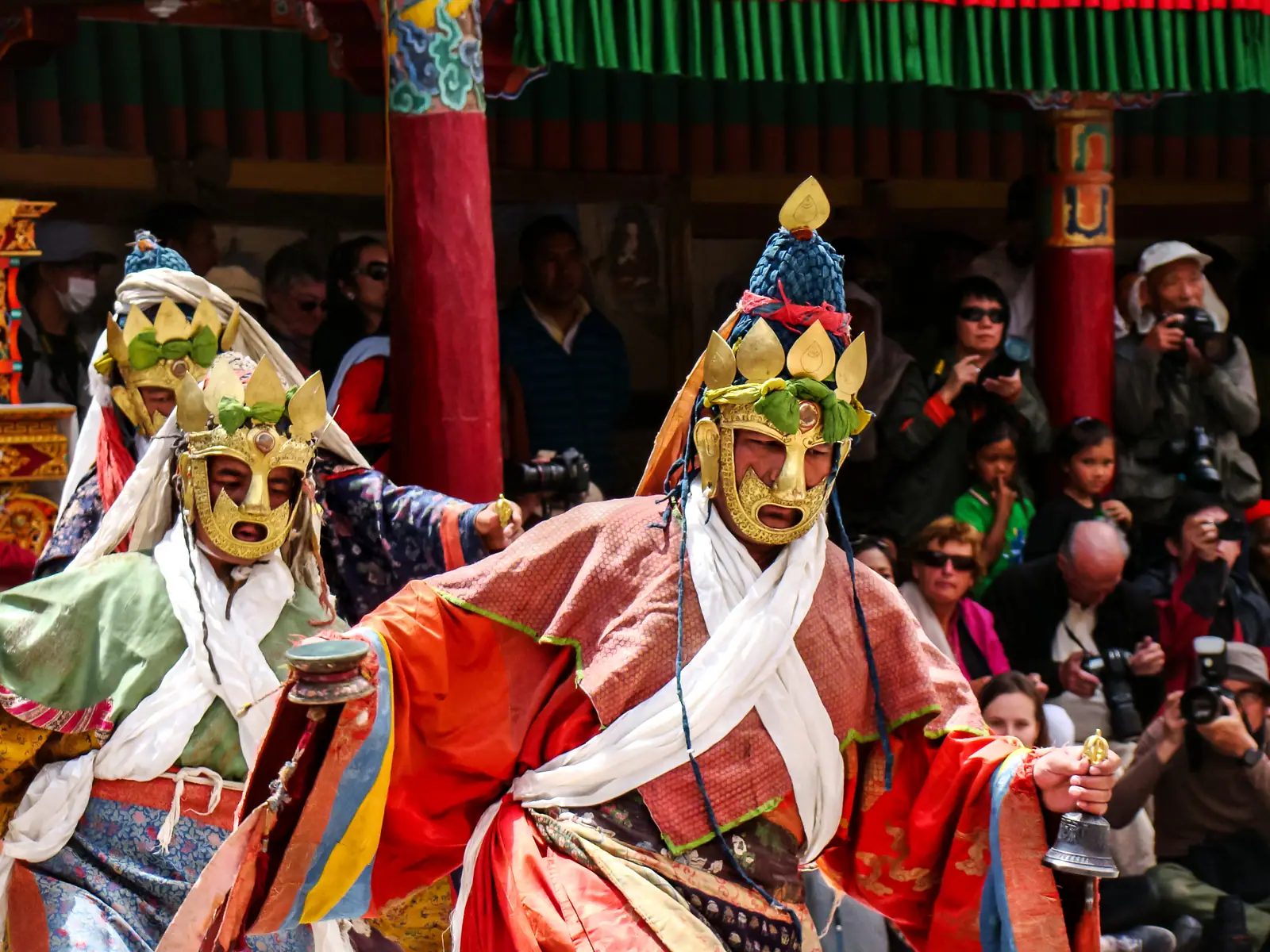
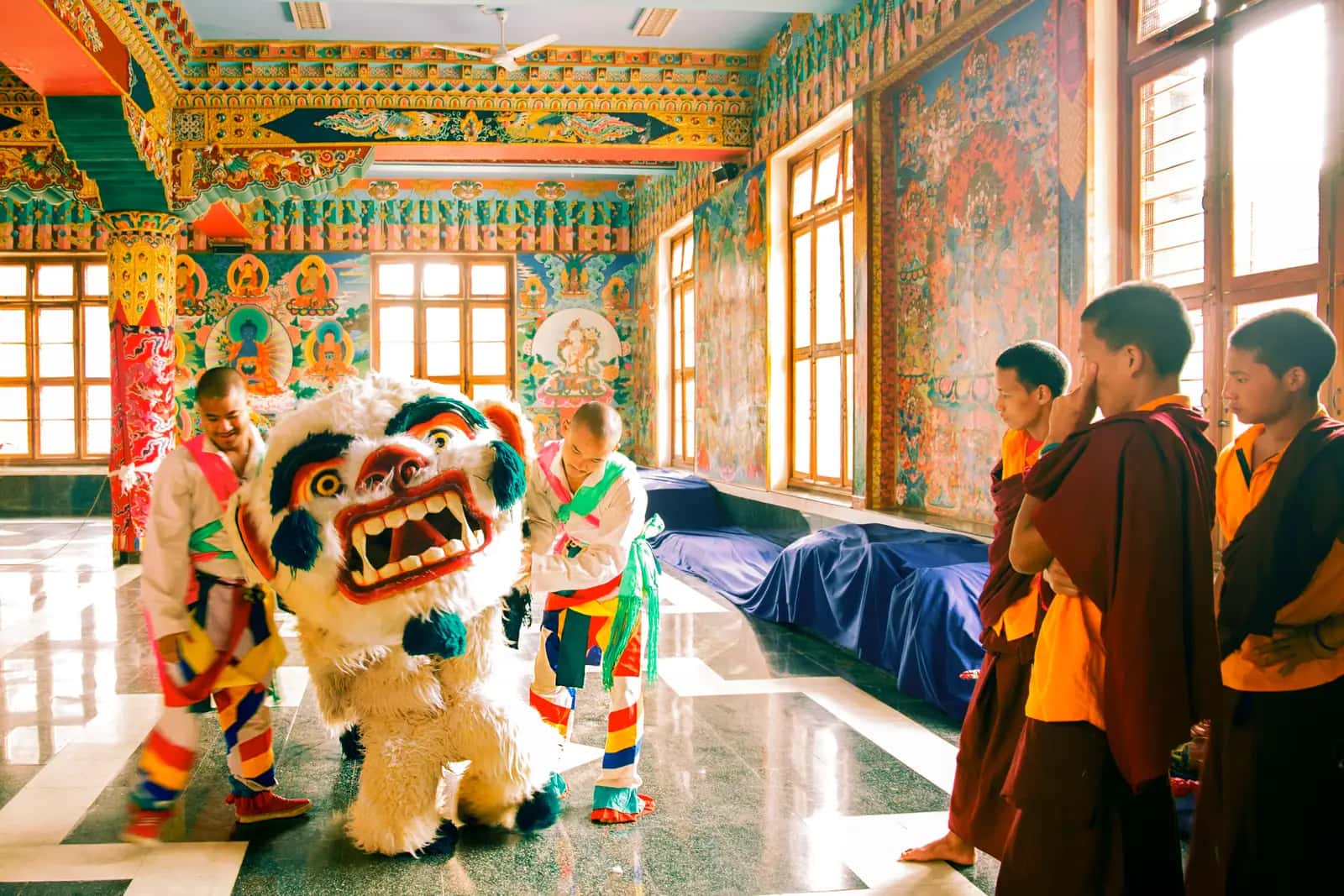
- Monastery prayers and masked cham dances before the new year
- The Metho torch procession in Ladakhi villages
- Losar at the Tsuglagkhang complex in McLeodganj
- Cham dances at Rumtek in Sikkim and Tawang Monastery
- Khapse biscuits, butter sculptures and barley beer in local homes
Two Losars, four places
Losar means new year in Tibetan, and India's Buddhist regions celebrate it at different times.
- Ladakh celebrates its own Losar in the 11th month of the Tibetan calendar, usually in December. Tradition says a 17th-century king brought the new year forward before a winter military campaign, and Ladakh kept the date.
- McLeodganj, home of the Tibetan government in exile, celebrates Tibetan Losar in February or early March.
- Sikkim and Tawang in Arunachal Pradesh also celebrate in February or March, with masked cham dances at monasteries such as Rumtek and Tawang in the days before.
What actually happens
Families clean their homes and prepare offerings: deep-fried khapse biscuits, butter sculptures and chhang, a barley beer. Monasteries hold prayers and, in many places, cham dances to drive out the old year's misfortune. In Ladakh, the Metho procession carries burning torches through villages on the eve. The first day of Losar is for family; visiting friends and monasteries follows on the second and third days.
Where to stay and what it costs
In Leh in December, most hotels close for winter; those that stay open charge ₹3,000–6,000 a night with heating, and flights are the only way in. McLeodganj in February has plenty of mid-range rooms at ₹2,500–5,000. Tawang is busy with domestic travellers chasing snow, so book two to three weeks ahead and get your Arunachal Inner Line Permit online.
Weather, safety and what to wear
Ladakh in December falls to -10°C to -15°C at night. Plan two days of acclimatisation in Leh and pack thermals, a down jacket and insulated boots. McLeodganj in February ranges from about 3°C to 15°C and Gangtok is similar, while Tawang drops well below freezing at night and Sela Pass is often snowbound.
Etiquette and photography
Walk clockwise around stupas and prayer wheels, remove shoes and hats in prayer halls, and do not point your feet at altars. Ask monks before photographing them and never use flash during prayers. Greet people with Tashi Delek. A white khata scarf is a respectful gift if you are invited into a home.
Planning your trip
See the best time to visit Ladakh, things to do in Dharamshala, the best time to visit Sikkim, our February ideas and the festival calendar.
Frequently asked questions
When is Losar celebrated in India?
Is Ladakh open to visitors for Losar in December?
What does Tashi Delek mean?
Can tourists visit monasteries during Losar?
How we checked this page
Last reviewed
Written and fact-checked by the Elitech Travels editorial desk in New Delhi, drawing on our consultants' day-to-day booking work and the official sources below. Rules, fares and fees change — always confirm anything critical with the issuing authority before you travel. Our editorial policy.