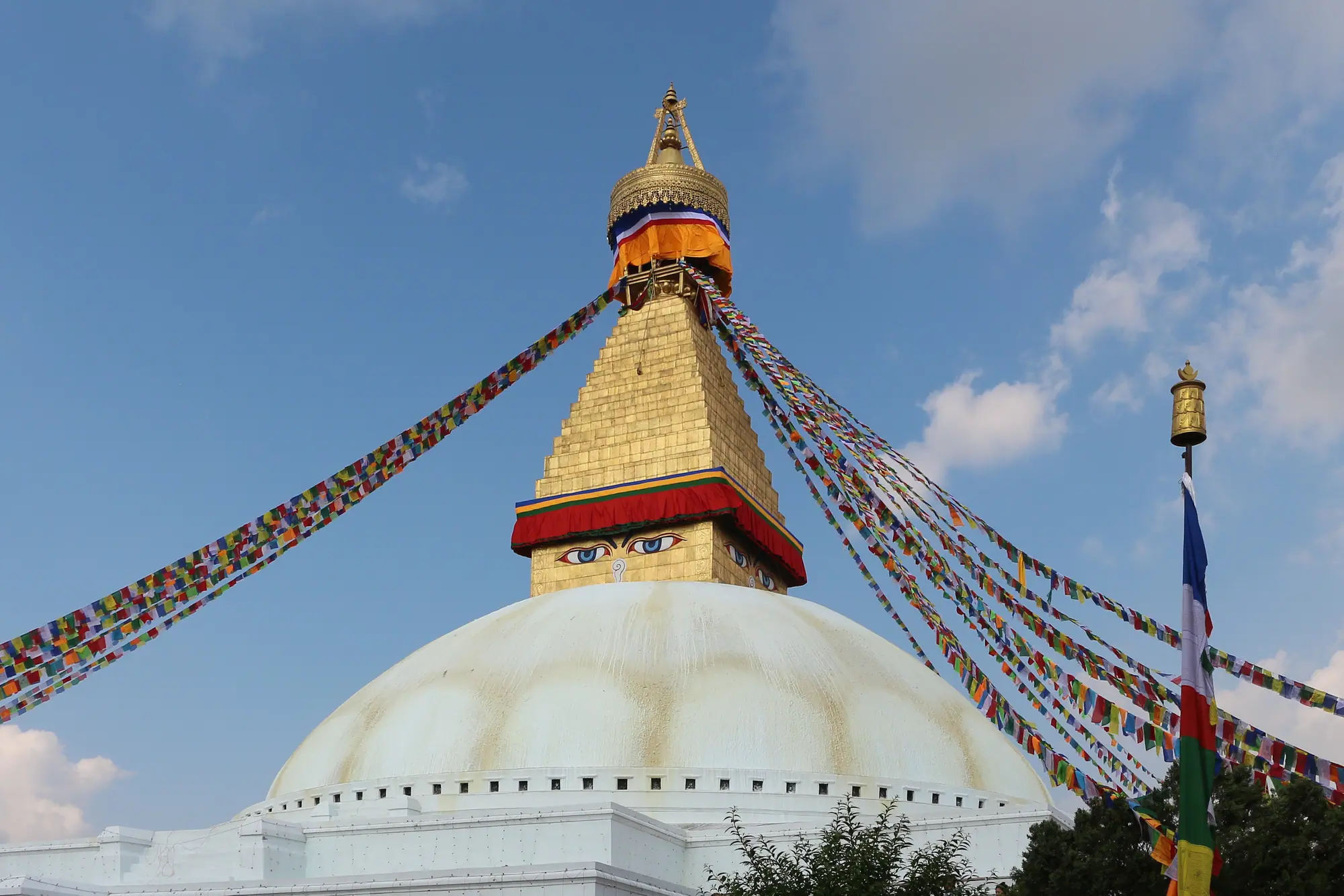
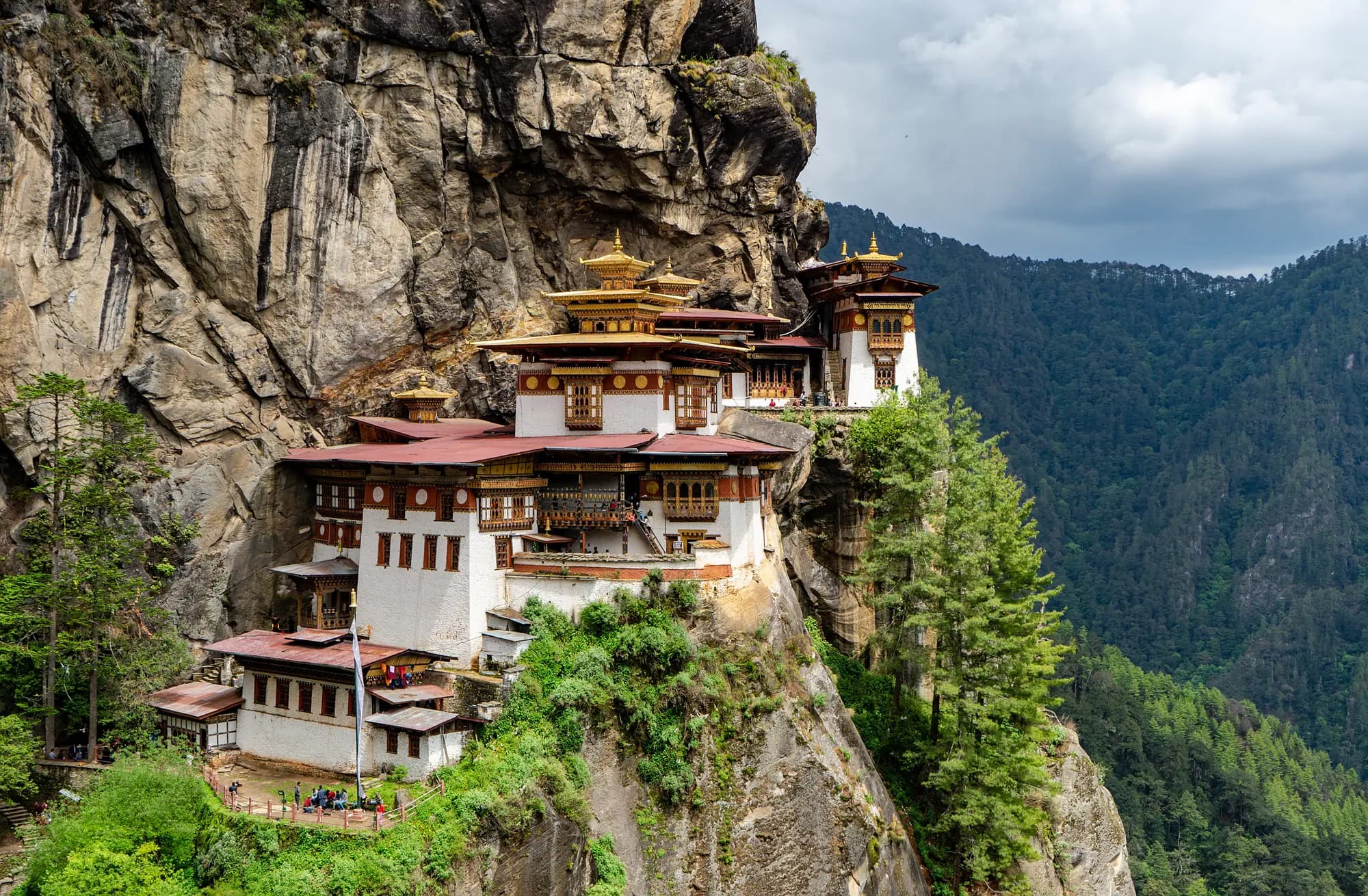
Our verdict
Pick Nepal for a cheaper, flexible trip — no visa or daily fee for Indians, Kathmandu's temples, Pokhara's lake and mountain views, and Himalayan treks — with 5 nights from about ₹20,000 on land. Pick Bhutan for a quieter, cleaner, more structured holiday with Paro's Tiger's Nest and working dzongs, accepting the ₹1,200 per night Sustainable Development Fee and 5 nights from about ₹38,000.
Side by side
| Factor | Nepal | Bhutan |
|---|---|---|
| Entry for Indians | No visa or fee; passport or voter ID | No visa; entry permit on passport or voter ID, plus SDF ₹1,200 per person per night |
| Flights from Delhi | About 1 h 45 min to Kathmandu; many daily flights | Limited flights to Paro, about 2.5 h; or fly to Bagdogra and drive 4–5 h to Phuentsholing |
| Starting trip cost (per person) | 5N land from ₹20,000 | 5N land from ₹38,000, including SDF |
| Best months | October–November; March–April | March to May; September to November |
| Vegetarian food | Dal bhat, momos, Indian food everywhere | Ema datshi, red rice; Indian dishes on most hotel menus |
| Mountains and trekking | Everest and Annapurna regions, teahouse treks, mountain flights | Fewer, costlier treks; Tiger's Nest hike |
| Culture | Kathmandu's Durbar Squares, Pashupatinath, Lumbini | Living Buddhist culture, dzongs, tsechu festivals |
| Cleanliness and crowds | Kathmandu traffic, dust and crowds | Quiet, clean and regulated |
| Adventure | Paragliding in Pokhara, rafting, bungee, jungle safari | Limited |
| Getting around | Kathmandu–Pokhara 6–8 h by road or 25 min by air | Winding roads; Thimphu–Punakha about 2.5–3 h |
Which one is for you?
Choose Nepal if…
- You want the cheapest Himalayan trip with no daily fee
- Trekking, paragliding or rafting is part of the plan
- You are visiting Pashupatinath, Muktinath, Janakpur or Lumbini
- You like flexible, independent travel
Choose Bhutan if…
- You want calm, clean towns and very few crowds
- Buddhist monasteries, dzongs and festivals interest you
- You are happy with a guided, pre-planned itinerary
- The Tiger's Nest hike is on your list
Different by design
Nepal and Bhutan are Himalayan neighbours with no visa for Indians, but they run tourism in opposite ways. Nepal is open and flexible: you can travel independently, trek on a budget and change plans as you go. Bhutan follows a high-value, low-volume policy, charges visitors a daily Sustainable Development Fee (SDF), and most itineraries include a licensed guide and private vehicle.
Entry rules for Indians
Neither needs a visa. For Nepal, carry a valid passport or voter ID; Aadhaar is not accepted for entry. For Bhutan, you get an entry permit on your passport or voter ID and pay the SDF of ₹1,200 per person per night (half for children aged 6–12, free under 6). A 5-night Bhutan trip therefore carries ₹6,000 per adult in SDF alone. See the Nepal entry guide and Bhutan entry guide.
Getting there
Delhi to Kathmandu takes about 1 hour 45 minutes, with many daily flights, often ₹10,000–18,000 return. Bhutan is harder: only Drukair and Bhutan Airlines fly into Paro, with limited Delhi departures of about 2.5 hours and fares of roughly ₹25,000–40,000 return. Many Indian travellers instead fly to Bagdogra and drive 4–5 hours to the border town of Phuentsholing.
Cost
A 5-night Nepal trip covering Kathmandu and Pokhara starts around ₹20,000 per person on land, twin sharing. A 5-night Bhutan trip covering Thimphu, Punakha and Paro starts around ₹38,000 on land, including SDF, guide and vehicle. See Bhutan trip cost.
What Nepal does better
- Mountains and trekking: the Everest and Annapurna regions, teahouse treks of 4–14 days, and early-morning mountain flights past Everest.
- Adventure: paragliding in Pokhara, rafting on the Trishuli, jungle safaris in Chitwan.
- Pilgrimage: Pashupatinath, Muktinath, Janakpur and Lumbini.
- Budget: hotels, food and transport cost little, and Indian food is everywhere.
What Bhutan does better
- Calm and cleanliness: little traffic, clean towns and no crowds outside festival days.
- Living Buddhist culture: dzongs that still serve as monasteries and offices, prayer flags on every pass, and tsechu festivals with masked dances.
- The Tiger's Nest: the cliffside Paro Taktsang monastery, reached by a 4–5 hour round-trip hike.
Food
Both are easy for vegetarians. Nepal runs on dal bhat, and Indian food is everywhere. Bhutan's national dish, ema datshi, is chillies cooked in cheese; hotels on tourist routes serve Indian dishes, and many local meals are vegetarian anyway.
Seasons
Nepal is best in October–November for clear mountain views, then March–April for rhododendrons. Bhutan is best from March to May and September to November. Avoid both in the June–September monsoon, when landslides block roads. See best time to visit Nepal.
Can you combine Nepal and Bhutan?
Yes. Drukair and Bhutan Airlines fly Kathmandu–Paro in about an hour, with Himalayan views on the left side of the aircraft. A 9–10 night trip of 4 nights in Nepal and 5 in Bhutan works well, but book the Paro flight early, as seats are limited.
Frequently asked questions
Do Indians need a visa for Nepal or Bhutan?
Which is cheaper, Nepal or Bhutan?
Can I drive to Bhutan from India?
Which is better for families with senior citizens?
How we checked this page
Last reviewed
Written and fact-checked by the Elitech Travels editorial desk in New Delhi, drawing on our consultants' day-to-day booking work and the official sources below. Rules, fares and fees change — always confirm anything critical with the issuing authority before you travel. Our editorial policy.