Quick answer
The best things to do in Bhutan are hiking to Tiger's Nest (Paro Taktsang), visiting Punakha Dzong at the river confluence, crossing Dochula Pass with its 108 chortens, seeing Buddha Dordenma above Thimphu, driving over Chele La to Haa and walking to Chimi Lhakhang. Add a hot-stone bath and an archery match. Indian visitors pay modest entry fees at most dzongs and temples.
13 things worth your time in Bhutan
- 01
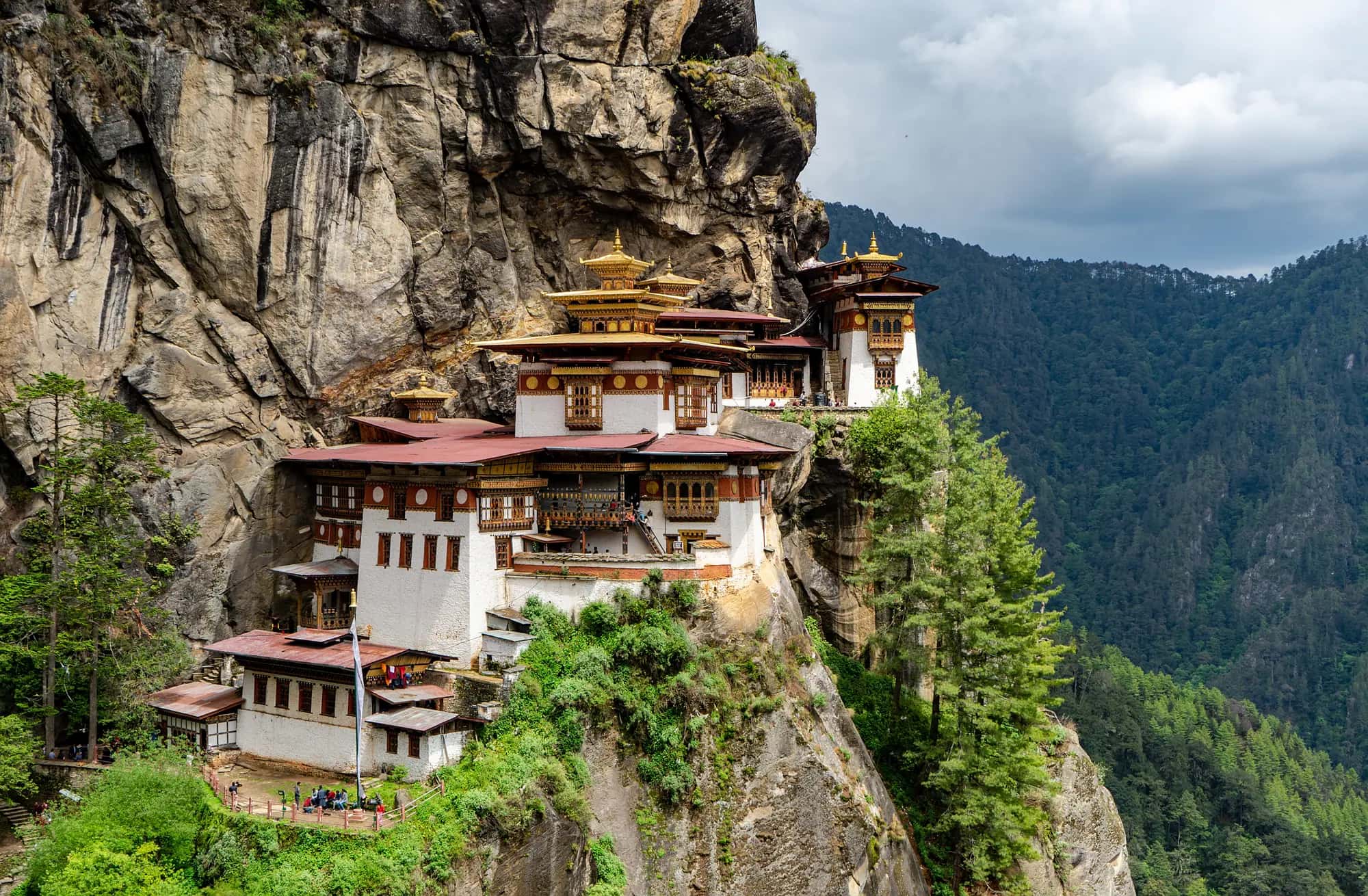
Tiger's Nest (Paro Taktsang) hike
LandmarkA monastery clinging to a cliff about 900 m above the Paro valley, at roughly 3,100 m. The trail climbs through pine forest to a café with the classic view, then on to the monastery itself.
5–6 hours returnModest entry fee for Indian visitors; pony to the halfway café about ₹1,000–1,500Do it on your last full day when you are acclimatised, and start by 8 am. Bags and cameras are left at the monastery gate.
- 02
Punakha Dzong
LandmarkBuilt in 1637–38 where the Pho Chhu and Mo Chhu rivers meet, it is the most beautiful dzong in Bhutan and the winter seat of the monk body. Jacarandas bloom outside in spring.
1.5–2 hoursSmall entry feeFull sleeves and long trousers or skirts are required inside; no caps or shorts.
- 03
Dochula Pass
NatureAt 3,100 m on the Thimphu–Punakha road, 108 memorial chortens frame a view of the eastern Himalaya on clear days, beside Druk Wangyel Lhakhang.
45 minutesFreeMornings from October to February give the clearest views.
- 04
Buddha Dordenma, Thimphu
LandmarkA 51 m gilded bronze Buddha on a hill above Thimphu, filled with more than 100,000 smaller Buddha statues.
1 hourFreeLate afternoon light on the statue and the valley is best.
- 05
Tashichho Dzong, Thimphu
LandmarkThe seat of government and the King's office. Visitors enter the courtyard after office hours and can watch the flag-lowering at dusk.
1 hourSmall entry feeWeekday visiting hours are short — your guide will time the visit.
- 06
National Memorial Chorten, Thimphu
LandmarkThimphu's busiest prayer site, where elderly residents circle the chorten and spin prayer wheels all day.
45 minutesSmall entry feeJoin the clockwise walk in the morning for a glimpse of everyday Bhutanese faith.
- 07
Rinpung Dzong and National Museum, Paro
LandmarkParo's fortress-monastery overlooks the valley and hosts the Paro Tshechu. The National Museum in the Ta Dzong watchtower above holds masks, thangkas and natural-history galleries.
2–3 hoursSmall entry feesWalk down from the museum to the dzong and cross the covered cantilever bridge below it.
- 08
Chele La Pass and Haa Valley
Day tripAt 3,988 m, Chele La is usually described as Bhutan's highest motorable pass, with prayer flags and views of Jomolhari on clear days. Beyond lies the quiet Haa valley.
Full dayFree (route permit needed for Haa)Carry warm layers — it can be near freezing at the pass even in April.
- 09
Chimi Lhakhang
LandmarkA 20-minute walk through rice fields leads to the temple of the 'Divine Madman', Drukpa Kunley, where couples pray for children. Village walls nearby are painted with phallus symbols.
1.5 hoursSmall entry feeThe path is flat and easy — fine for seniors.
- 10
Punakha suspension bridge and rafting
ExperienceOne of Bhutan's longest suspension bridges, hung with prayer flags over the Pho Chhu. Gentle rafting on the Mo Chhu drifts past Punakha Dzong.
1–3 hoursBridge free; rafting about ₹3,500–7,000 per personRafting runs best from March to May and October to November.
- 11
Hot-stone bath (dotsho)
ExperienceRiver stones heated in a fire are dropped into a wooden tub of water with medicinal herbs — ideal after the Tiger's Nest hike.
1–2 hoursAbout ₹1,500–3,000 per personBook through your hotel or a Paro farmhouse a day ahead.
- 12
Archery and Centenary Farmers' Market, Thimphu
ExperienceArchery is the national sport, and matches are noisy, sociable affairs. The weekend farmers' market sells chillies, red rice and datshi cheese.
1–2 hoursFreeThe market is busiest from Friday to Sunday.
- 13
Kyichu Lhakhang, Paro
LandmarkOne of Bhutan's oldest temples, traditionally dated to the 7th century, with orange trees in the courtyard.
45 minutesSmall entry feeEasy to add on the day of the Tiger's Nest hike.
How Bhutan sightseeing works
A Bhutan trip is a loop of valleys joined by mountain roads: Paro (airport and Tiger's Nest), Thimphu (the capital) and Punakha (over Dochula Pass). Distances are short — Thimphu to Punakha is about 75 km — but drives take two and a half to three hours. Indians arriving by road enter at Phuentsholing, about five to six hours' drive from Thimphu.
Your guide handles permits, timings and dress rules. At dzongs and temples you must wear full sleeves and long trousers or skirts and remove hats, and photography is not allowed inside most shrines.
What do Indian visitors pay?
Indian nationals pay a Sustainable Development Fee of ₹1,200 per person per night, plus modest entry fees at major dzongs, temples and museums — usually a few hundred rupees each. A route permit is needed for travel beyond Thimphu and Paro, such as to Punakha or Haa; your operator arranges it as part of the booking.
What suits whom?
- Seniors: Dochula, Buddha Dordenma, Punakha Dzong and Chimi Lhakhang are easy. Tiger's Nest needs fitness; ponies go only to the halfway café.
- Families: farmhouse visits, archery, hot-stone baths and the suspension bridge.
- Active travellers: Tiger's Nest, Chele La and rafting on the Mo Chhu.
Plan the rest of your trip
Time your visit with the best time to visit Bhutan and its festival calendar. Follow our 6-day Bhutan itinerary, check the Bhutan trip cost guide for SDF, guide and hotel costs, and read the Bhutan visa guide for permit documents.
Frequently asked questions
How difficult is the Tiger's Nest hike?
Do Indians need a guide in Bhutan?
What should I wear to dzongs and temples in Bhutan?
How we checked this page
Last reviewed
Written and fact-checked by the Elitech Travels editorial desk in New Delhi, drawing on our consultants' day-to-day booking work and the official sources below. Rules, fares and fees change — always confirm anything critical with the issuing authority before you travel. Our editorial policy.