Quick answer
The essentials in Varanasi are a sunrise boat ride along the ghats, the evening Ganga aarti at Dashashwamedh, darshan at Kashi Vishwanath, a walk from Assi to Manikarnika and a half-day at Sarnath, where the Buddha gave his first sermon. Most of it is free. Two full days covers the core; three lets you slow down.
13 things worth your time in Varanasi
- 01
Sunrise boat ride along the ghats
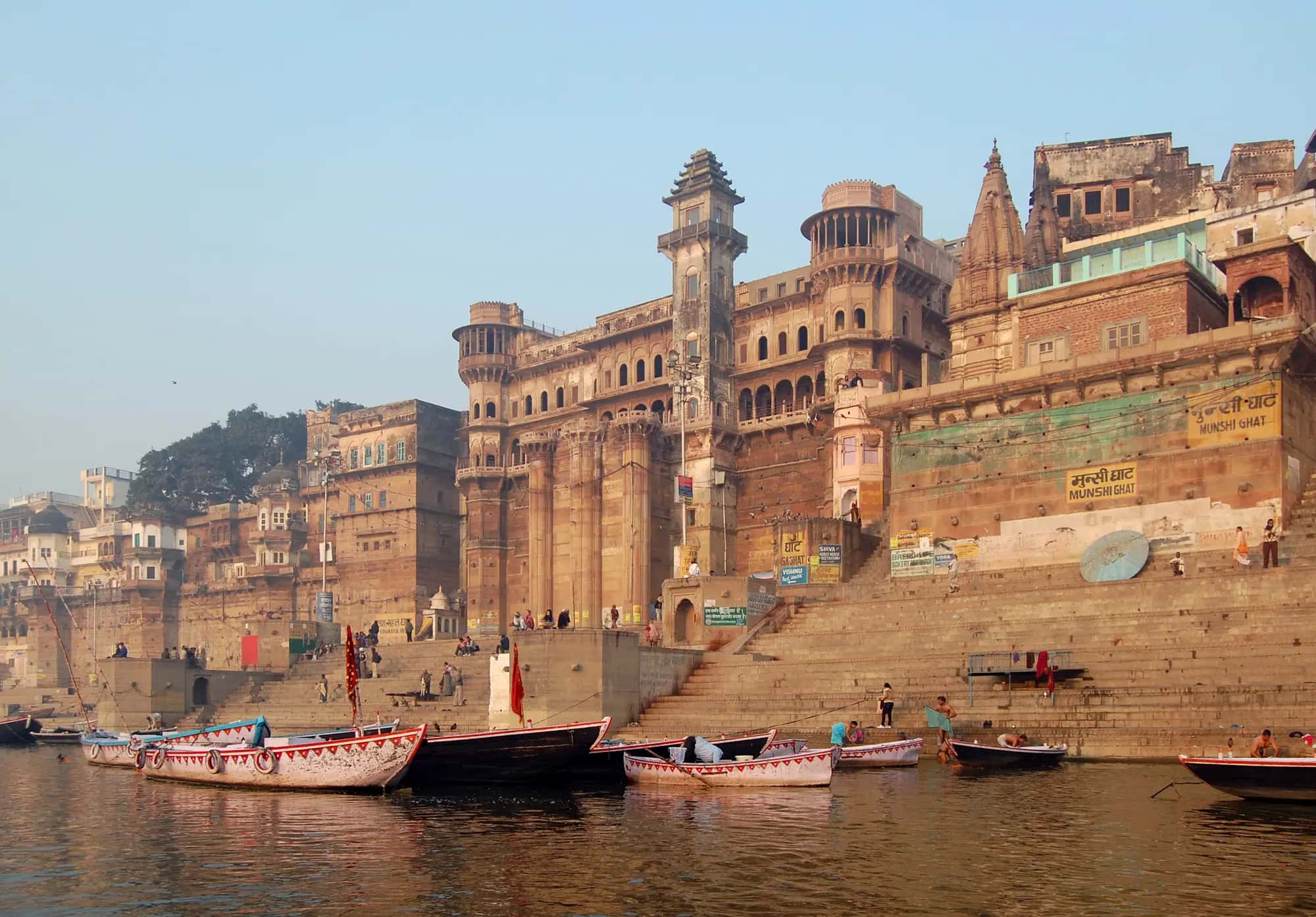
ExperienceThe ghats face east, so first light falls on the temples, bathers and washermen at once. It is the single most important thing to do in the city.
1.5–2 hoursShared boats from about ₹200–400 per person; private rowing boat about ₹800–1,500 an hourAgree route, duration and price before you step in, and choose a rowing boat over a diesel launch for quiet.
- 02
Evening Ganga aarti at Dashashwamedh Ghat
ExperienceYoung priests perform a synchronised aarti with multi-tiered brass lamps, conch shells and bells, every evening around sunset.
1–1.5 hoursFree; a seat on a moored boat costs extraArrive 45 minutes early for a place on the steps, or watch from a boat moored in front.
- 03
Subah-e-Banaras at Assi Ghat
ExperienceA dawn programme of aarti, Vedic chanting, classical music and yoga, starting around 5 am and earlier in summer.
1.5 hoursFreeCombine it with a sunrise boat leaving from Assi.
- 04
Kashi Vishwanath Temple and Corridor
LandmarkOne of the twelve jyotirlingas. The corridor opened in 2021 links the temple directly to the river at Lalita Ghat.
1–3 hours depending on queuesFree; a paid Sugam Darshan ticket shortens the queuePhones, bags, pens and leather items are not allowed; use the lockers. Early weekday mornings have the shortest queues.
- 05
Walk the ghats from Assi to Manikarnika
ExperienceAbout 4 km of steps past Tulsi, Harishchandra, Kedar, Darbhanga and Dashashwamedh ghats, each with its own temples and stories.
2–3 hoursFreeStart in the late afternoon heading north so you finish at Dashashwamedh in time for the aarti.
- 06
Manikarnika Ghat
LandmarkThe main cremation ghat, where pyres burn day and night. Seeing it explains why Hindus come to Kashi at the end of life.
30–45 minutesFreeNever photograph cremations. Walk past men who offer to explain the rituals and then ask for money for wood.
- 07
Sarnath
Day tripTen km from the city, where the Buddha gave his first sermon. See the Dhamek Stupa, the Ashokan pillar and the Lion Capital in the Archaeological Museum.
Half dayAbout ₹25 for the excavated site; the museum charges a separate small feeThe Archaeological Museum is closed on Fridays.
- 08
Old city food walk
FoodKachori-sabzi, tamatar chaat, lassi in clay cups, Banarasi paan and, in winter, malaiyyo, all within a kilometre of Godowlia.
2–3 hours₹300–600 in foodMornings for kachori and malaiyyo; evenings for chaat.
- 09
Banarasi silk weavers
ShoppingWeaving households in Madanpura and Sarai Mohana still run handlooms, and buying close to the source is better value than city showrooms.
1–2 hoursFree to visit; saris from about ₹3,000 to well over ₹1 lakhDrivers earn commission on 'factory' visits. Look for the Silk Mark label and the Banarasi GI tag.
- 10
Ramnagar Fort
LandmarkThe 18th-century fort of the Kashi royal family across the river, with an eccentric museum of vintage cars, palanquins, clocks and weapons.
1.5 hoursMuseum ticket under ₹200Go in the late afternoon and come back by boat for the sunset view of the ghats.
- 11
BHU and Bharat Kala Bhavan
LandmarkBanaras Hindu University's leafy campus, the New Vishwanath Temple and a fine museum of miniature paintings, textiles and sculpture.
2 hoursCampus free; museum charges a small feeTen minutes from Assi Ghat; pair it with the ghats in the afternoon.
- 12
Sankat Mochan Hanuman Temple
LandmarkFounded by Tulsidas and one of the city's most loved temples; Tuesdays and Saturdays are busy with devotees and laddoo offerings.
45 minutesFreePhones are not allowed inside; deposit them at the counter.
- 13
Classical music evening
ExperienceVaranasi is home to the Banaras gharana, and small music rooms near Assi and Bengali Tola host evening sitar, tabla and vocal recitals.
1–2 hours₹300–1,000 for small recitals; festivals are often freeThe Sankat Mochan Sangeet Samaroh in April runs through the night and is free.
How many days do you need in Varanasi?
Two full days covers the essentials; three lets you add Sarnath and slow down. Varanasi's rhythm runs around the river, so the best plan is to be on the water at dawn, rest through midday, and come back to the ghats for the evening aarti. Most of what matters costs nothing.
Ghats first, temples second
The 84 ghats stretch about 6.5 km along the west bank of the Ganga, from Assi in the south to Raj Ghat in the north. The stretch from Assi to Manikarnika is the most walkable, and Dashashwamedh is the centre of gravity. Mornings are for bathing, prayer and the light; evenings for aarti. Outside winter, the middle of the day is hot and harsh on the open steps.
Sarnath needs a separate half-day. It is 10 km north of the city, takes 30–45 minutes by car, and is a quiet change of pace after the ghats.
Scams and annoyances to expect
- 'Free guides' at Manikarnika who later demand money for cremation wood. Politely walk on.
- Silk 'factory' visits arranged by drivers, where the price includes their cut.
- Boat prices that double at aarti time. Agree a fixed rate and duration first.
- Temple touts offering VIP darshan. The official Sugam Darshan is sold by the temple trust.
The ghats are not wheelchair-friendly: steep steps and no rails. For older parents, a boat covers most of the river view without the climbing.
Plan the rest
Check the best time to visit Varanasi before you fix dates, since floods close the ghats in August. For food, see the Varanasi food guide; for hotels, where to stay in Varanasi. Day-by-day plans are on the itineraries page, and you can send us an enquiry for a quote.
Frequently asked questions
What time is the Ganga aarti in Varanasi?
Is a boat ride in Varanasi worth it?
Can non-Hindus enter Kashi Vishwanath Temple?
Is it okay to watch cremations at Manikarnika Ghat?
How we checked this page
Last reviewed
Written and fact-checked by the Elitech Travels editorial desk in New Delhi, drawing on our consultants' day-to-day booking work and the official sources below. Rules, fares and fees change — always confirm anything critical with the issuing authority before you travel. Our editorial policy.