Quick answer
Jaipur's essentials are Amber Fort at opening time, City Palace and Jantar Mantar side by side, Hawa Mahal in morning light, sunset at Nahargarh and an evening in the old city bazaars. Add Jaigarh, Panna Meena ka Kund, Albert Hall at night and a block-printing workshop. Two full days covers it; three is relaxed.
13 things worth your time in Jaipur
- 01
Amber Fort
LandmarkA Rajput palace on the Aravalli ridge above Maota Lake, with the mirror-lined Sheesh Mahal and views down the old trade route.
2.5–3 hoursAbout ₹100–200 for Indians; on the composite ticketGates open at 8 am. Walk up the ramp or take a jeep; we suggest skipping elephant rides.
- 02
City Palace
LandmarkThe royal family's palace, still partly lived in, with textile and arms galleries and the four painted gates of Pritam Niwas Chowk.
2 hoursRoughly ₹300 for Indians; not on the composite ticketGo straight after Amber; Jantar Mantar is next door.
- 03
Hawa Mahal
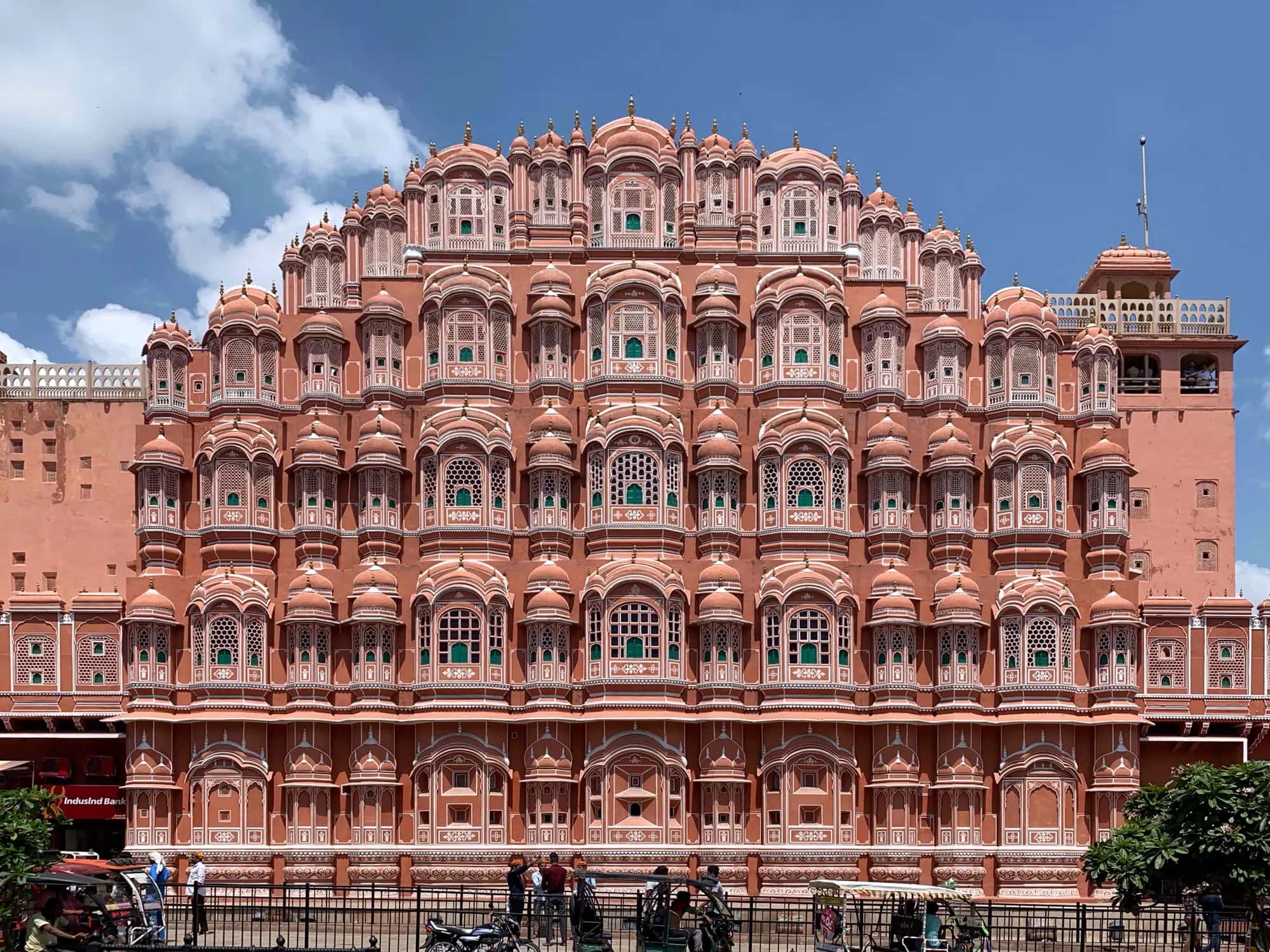
LandmarkThe 1799 façade of 953 small windows let royal women watch street processions unseen.
45 minutesAbout ₹50 for Indians; on the composite ticketThe best view is from the cafés opposite. It faces east, so go in the morning.
- 04
Jantar Mantar
LandmarkA UNESCO-listed 18th-century observatory whose giant Samrat Yantra sundial tells local time to within about two seconds.
1 hourAbout ₹50 for Indians; on the composite ticketHire a guide or use the audio guide; without explanation it is just geometry.
- 05
Nahargarh Fort at sunset
LandmarkA ridge-top fort with the best view over the Pink City, and Madhavendra Bhawan's linked suites for nine queens.
2 hoursAbout ₹50 for Indians; on the composite ticketThe road is steep and narrow; go up by 4:30 pm in winter to get a ramparts spot.
- 06
Jaigarh Fort
LandmarkThe military fort above Amber, home to Jaivana, one of the largest cannons on wheels in the world.
1.5 hoursSeparate ticket, about ₹100–200A walkway links it to Amber, so do both in one morning.
- 07
Albert Hall Museum
LandmarkAn Indo-Saracenic museum with an Egyptian mummy, armour and miniature paintings, lit up in colour at night.
1.5 hoursAbout ₹40 for Indians; on the composite ticketSee inside by day, then come back after dark for the façade.
- 08
Panna Meena ka Kund
LandmarkA 16th-century stepwell near Amber with criss-cross stairs on three sides, ideal for photographs.
30 minutesFreeWalking down the steps is no longer allowed; photograph from the edge.
- 09
Old city bazaars
ShoppingJohari Bazaar for jewellery, Bapu Bazaar for textiles and mojaris, Tripolia for lac bangles and Chandpole for marble work.
2–3 hoursFreeShops your driver recommends add 20–40% for his commission; walk in on your own.
- 10
Block printing in Bagru or Sanganer
ExperienceFamilies in Bagru still print with natural dyes and carved wooden blocks; you can print your own scarf.
Half dayWorkshops about ₹1,000–2,500 per personThe Anokhi Museum of Hand Printing at Amber is a good primer first.
- 11
Chokhi Dhani
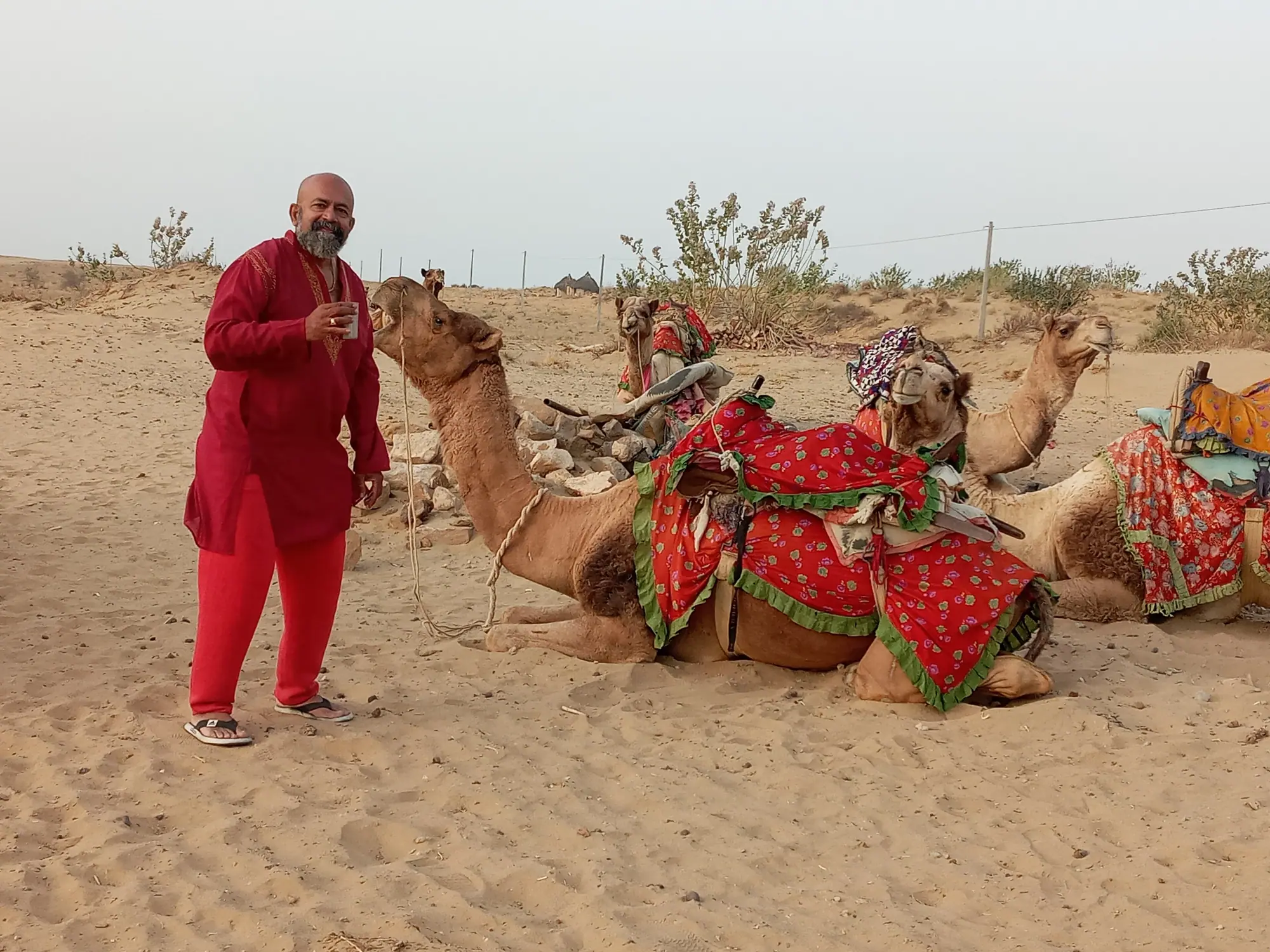
ExperienceA recreated Rajasthani village with folk dance, puppets, camel rides and a sit-down Rajasthani thali. Touristy, but families love it.
3 hoursAbout ₹900–1,500 per adult with dinnerWeekends are packed; arrive early in the evening.
- 12
Galta Ji (Monkey Temple)
LandmarkA temple complex in a gorge with spring-fed tanks and hundreds of macaques, with a sunset view from the Surya temple above.
1.5 hoursFree; small camera feeDon't carry food in your hands.
- 13
Abhaneri's Chand Baori
Day tripA 13-storey stepwell from the 9th century with about 3,500 steps, 95 km from Jaipur on the Agra road.
Half daySmall entry feeAn easy stop between Jaipur and Agra, so do it on a transfer day.
How many days do you need in Jaipur?
Two full days covers the essentials; three let you add Jaigarh, a block-printing workshop or a trip to Abhaneri. Split the city in two: the forts on the Amber ridge one morning, the old city's palaces and bazaars the next.
Save money with the composite ticket
The Rajasthan government's composite ticket covers Amber Fort, Hawa Mahal, Jantar Mantar, Albert Hall, Nahargarh and a few gardens, and is valid for two days. It pays off if you plan to see four or more of them. City Palace and Jaigarh are run by the royal family's trusts and need separate tickets. Rates are revised from time to time, so check before you go.
A sensible order
- Day 1 morning: Amber Fort at 8 am, Jaigarh, Panna Meena ka Kund, with a photo stop at Jal Mahal on the way back.
- Day 1 afternoon: City Palace and Jantar Mantar, which sit side by side.
- Day 1 evening: Nahargarh for sunset.
- Day 2: Hawa Mahal in morning light, the bazaars, and Albert Hall after dark.
Handle with care
Elephant rides at Amber raise serious welfare concerns, so walk up the ramp or take a jeep. Drivers and guides often steer you to jewellery and textile 'emporiums' that pay them commission; say no politely, or set the rule at the start.
Traffic inside the walled city is slow. Park once near Badi Chaupar and walk, or hop on an e-rickshaw between bazaars.
Plan the rest
Check the best time to visit Jaipur, eat through the Jaipur food guide, and pick a base in where to stay in Jaipur. Jaipur is the gateway to Rajasthan and the third leg of the Golden Triangle.
Frequently asked questions
Is the Jaipur composite ticket worth it?
What time does Amber Fort open?
Should I take an elephant ride at Amber Fort?
Can you see Jaipur in one day?
How we checked this page
Last reviewed
Written and fact-checked by the Elitech Travels editorial desk in New Delhi, drawing on our consultants' day-to-day booking work and the official sources below. Rules, fares and fees change — always confirm anything critical with the issuing authority before you travel. Our editorial policy.