Quick answer
Visit Jaipur from October to March, when days are 22–33 °C and nights are cool enough for rooftop dinners. November to February is peak season, with the Jaipur Literature Festival in January and kites on Makar Sankranti. Avoid May and June, when afternoons pass 40 °C. The monsoon, July to September, is green and quiet, and good value if you can handle humidity.
Month-by-month at a glance
- Jan22°Best
- Feb25°Best
- Mar31°Good
- Apr37°Fair
- May40°Avoid
- Jun39°Avoid
- Jul34°Fair
- Aug32°Fair
- Sep33°Fair
- Oct33°Good
- Nov29°Best
- Dec24°Best
Jaipur weather, crowds and what to expect
| Month | High / Low | Rain | Crowds | What to expect |
|---|---|---|---|---|
| JanuaryBest | 22° / 8° | 8 mm | high | Cool, sunny days; kite festival on 14 January and the Literature Festival. |
| FebruaryBest | 25° / 11° | 8 mm | high | Peak wedding and tourist season; reach Amber Fort at opening time. |
| MarchGood | 31° / 16° | 5 mm | medium | Warm afternoons; Holi; Gangaur preparations begin. |
| AprilFair | 37° / 22° | 5 mm | low | Hot; Gangaur procession from City Palace in early April 2027. |
| MayAvoid | 40° / 26° | 15 mm | low | Peak heat, often 43 °C or more. |
| JuneAvoid | 39° / 27° | 60 mm | low | Hot until pre-monsoon showers late in the month. |
| JulyFair | 34° / 26° | 190 mm | low | Monsoon greens the Aravallis; Teej and ghewar season. |
| AugustFair | 32° / 25° | 200 mm | low | Wettest month; low hotel rates, green views from Nahargarh. |
| SeptemberFair | 33° / 23° | 80 mm | low | Rains taper; humid. |
| OctoberGood | 33° / 19° | 20 mm | medium | Warm early, pleasant late; Dussehra. |
| NovemberBest | 29° / 13° | 5 mm | high | Ideal weather; Diwali lights in the old city bazaars. |
| DecemberBest | 24° / 9° | 3 mm | high | Christmas-New Year week is the busiest of the year. |
Long-term monthly averages. Individual years vary — check a forecast in the week before you travel.
Festivals and events in Jaipur
Late January (dates announced in autumn)
Jaipur Literature Festival
Five days of talks and music; general entry has historically been free with online registration.
14 January
Makar Sankranti kite festival
Old city rooftops fill with kite fliers from morning; sky lanterns at night.
8 November 2026
Diwali
Johari, Bapu and Chandpole bazaars are lit up and judged for their lighting.
About 18 days after Holi (early April 2027)
Gangaur
A procession leaves City Palace and winds through Tripolia Bazaar.
July–August
Teej
The Teej procession, swings in gardens and fresh ghewar in every sweet shop.
When is the best time to visit Jaipur?
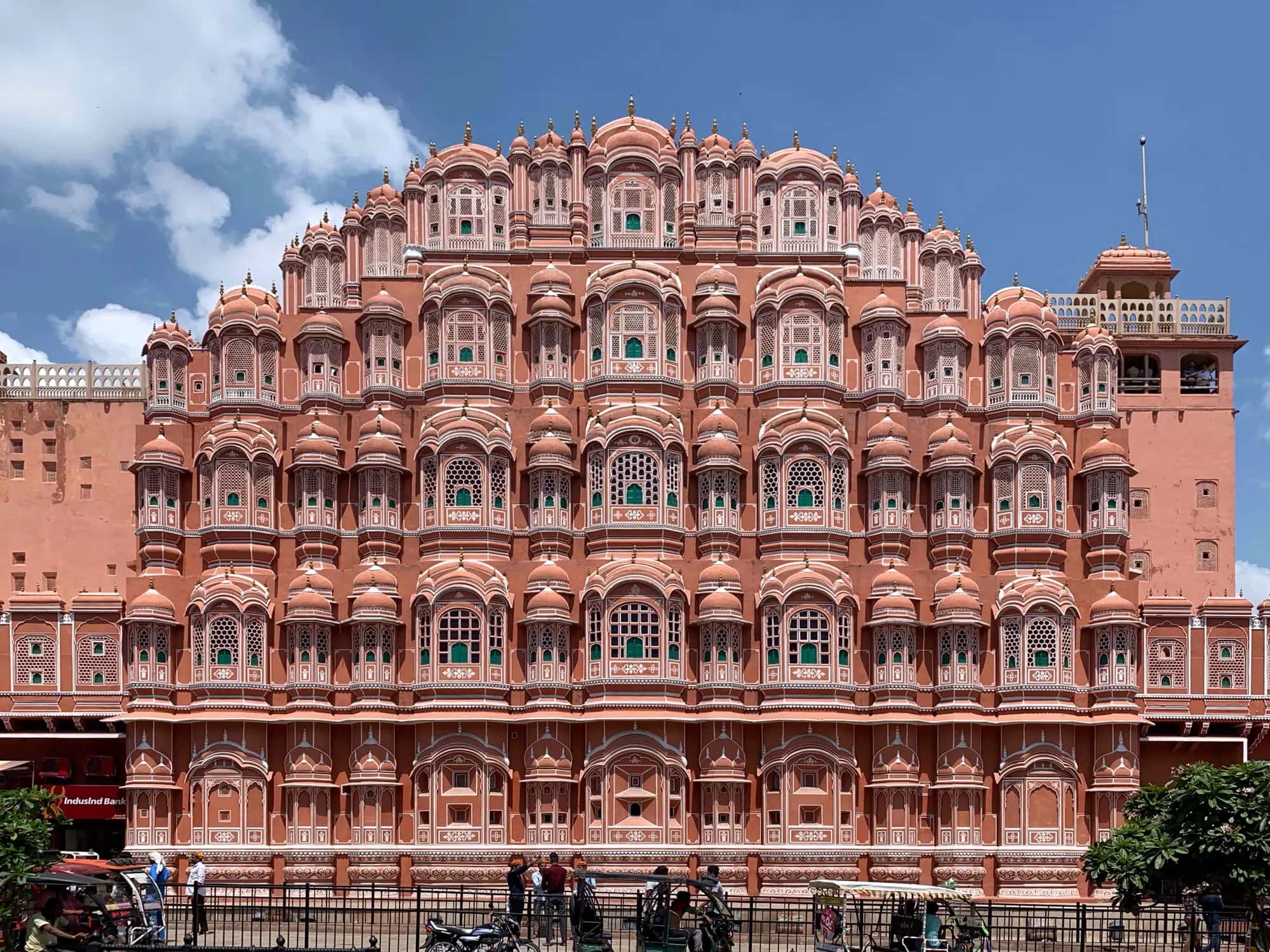
October to March. Days settle at 22–30 °C, the climb up to Amber Fort and Nahargarh is comfortable, and evenings are cool enough for the rooftop restaurants facing Hawa Mahal. November to February is peak season, so start early at Amber Fort to stay ahead of the tour groups.
Month by month
October–November. October starts warm and ends pleasant. Diwali, on 8 November in 2026, is the best night of the year to walk the old city, when the bazaars are lit up and compete for the best lighting.
December–February. Peak season. Nights fall to 7–9 °C, so carry a jacket for the evening show at Amber and dinners at Chokhi Dhani. The Jaipur Literature Festival takes over the city in late January, and on Makar Sankranti (14 January) the rooftops of the Pink City fill with kites.
March–April. Holi in March, then Gangaur in early April 2027, when a procession leaves City Palace through Tripolia Bazaar. By April, 37 °C afternoons make the forts hard work after 11 am.
May–June. Avoid. Temperatures pass 42 °C and stone ramparts radiate heat into the evening.
July–September. The Aravallis turn green, Nahargarh and Jaigarh look their best, and hotel rates often fall by a third or more. Teej, in July or August, is when ghewar is freshest. Short, heavy showers can disrupt plans for an hour or two.
For Amber Fort, be at the gate when it opens at 8 am. By 10:30 am in season, the ramps are full of tour groups.
Plan the rest
See things to do in Jaipur, the Jaipur food guide and where to stay in Jaipur. Jaipur fits into a wider Rajasthan trip or the Golden Triangle with Delhi and Agra.
Frequently asked questions
Which month is best for Jaipur?
Is Jaipur too hot in April?
Is the monsoon a good time to visit Jaipur?
When is the Jaipur kite festival?
How we checked this page
Last reviewed
Written and fact-checked by the Elitech Travels editorial desk in New Delhi, drawing on our consultants' day-to-day booking work and the official sources below. Rules, fares and fees change — always confirm anything critical with the issuing authority before you travel. Our editorial policy.