Quick answer
The essential things to do in Switzerland are one high-altitude excursion (Jungfraujoch, Titlis, Schilthorn or Gornergrat), a Lake Lucerne cruise, Lucerne's old town, the Lauterbrunnen valley and the Matterhorn from Zermatt. Most trains, boats and some mountains are covered or discounted by the Swiss Travel Pass, which is the single biggest money decision on a Swiss trip.
14 things worth your time in Switzerland
- 01
Jungfraujoch — Top of Europe
Day tripEurope's highest railway station at 3,454 m, with the Sphinx observation deck, the Ice Palace and views over the Aletsch, the longest glacier in the Alps.
Full day (6–8 hours from Interlaken)About ₹28,700 (CHF 261) return from Interlaken in summer; about ₹19,700 (CHF 179) with a Swiss Travel PassCheck the summit webcam before you pay. On a cloudy day you see only white, and the ticket is the most expensive thing you'll buy in Switzerland.
- 02
Mount Titlis and the Rotair
LandmarkA revolving cable car to about 3,000 m, a glacier cave, the Cliff Walk suspension bridge and snow all year — an easy day from Lucerne with an hour's train to Engelberg.
5–6 hours from LucerneAbout ₹10,000–11,000 (CHF 90–100) return from Engelberg; half price with a Swiss Travel PassGo on the first gondolas. By late morning in May and June, Indian tour groups fill the queues at Stand.
- 03
Lucerne old town and Chapel Bridge
LandmarkThe covered wooden Chapel Bridge, the Lion Monument and painted squares, all a short walk from the station.
2–3 hoursFreeClimb the Musegg Wall towers (free, roughly April to November) for the view over the rooftops.
- 04
Lake Lucerne cruise
ExperienceRestored paddle steamers link Lucerne with lakeside villages and the Rigi and Pilatus railways.
1–4 hoursIncluded with a Swiss Travel Pass; otherwise about ₹3,300–7,700 (CHF 30–70) - 05
Mount Rigi
NatureEurope's first mountain railway (1871) and a wide view over Lake Lucerne. Gentler and lower than Titlis, which suits parents who struggle with altitude.
Half dayIncluded with a Swiss Travel Pass; otherwise about ₹7,700–9,400 (CHF 70–85) round tripGo up by boat and cogwheel train from Vitznau, come down by cable car to Weggis.
- 06
Pilatus Golden Round Trip
ExperienceBoat to Alpnachstad, the world's steepest cogwheel railway up, then gondolas down to Kriens and a bus to Lucerne.
5–6 hoursAbout ₹13,000–14,900 (CHF 120–135) full fare; discounted with a Swiss Travel PassThe cogwheel railway runs roughly May to November. In winter, use the gondola from Kriens both ways.
- 07
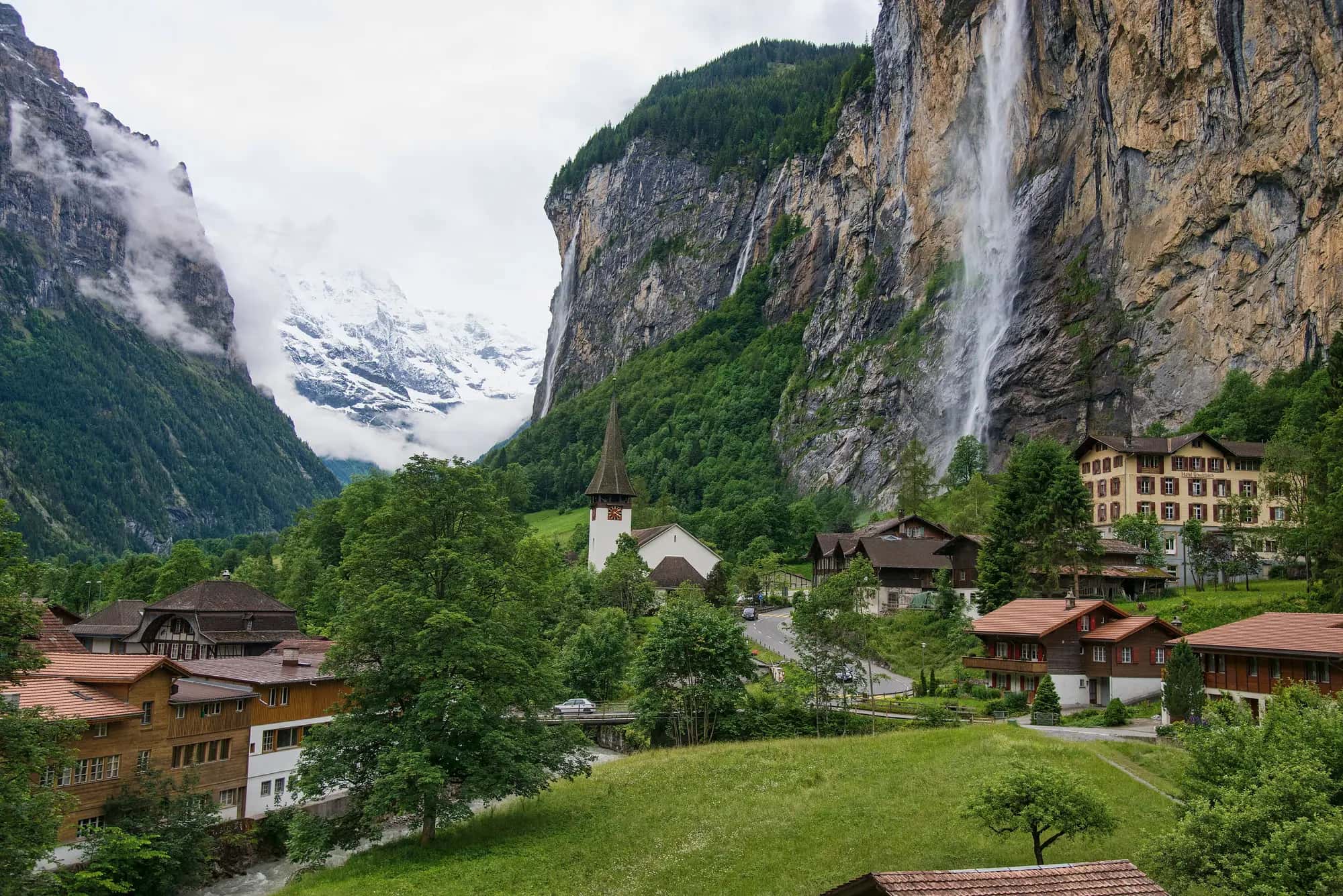
Lauterbrunnen valley and Trümmelbach Falls
NatureA sheer-sided glacier valley with Staubbach Falls dropping nearly 300 m beside the village, and Trümmelbach's glacier waterfalls thundering inside the mountain.
Half dayValley free; Trümmelbach about ₹1,700 (CHF 15)Trümmelbach is open roughly April to early November and involves steep, wet steps.
- 08
Grindelwald First
ExperienceThe First Cliff Walk, the First Flyer zipline, mountain carts and a one-hour walk to the Bachalpsee lake.
Half dayAbout ₹7,200–8,300 (CHF 65–75) return gondola; discounted with a Swiss Travel Pass; zipline and carts extra - 09
Schilthorn — Piz Gloria
LandmarkA 2,970 m summit with a revolving restaurant, a James Bond exhibition and close views of the Eiger, Mönch and Jungfrau. Often the better-value alternative to the Jungfraujoch.
Half dayAbout ₹12,000–14,300 (CHF 110–130) return; half price with a Swiss Travel Pass - 10
Zermatt and the Gornergrat railway
Day tripCar-free Zermatt and the Matterhorn seen from 3,089 m, with the Gorner glacier below. The classic Matterhorn photograph is from Riffelsee, one stop down.
Full dayGornergrat about ₹10,000–14,300 (CHF 90–130) return depending on date; half price with a Swiss Travel PassMornings are usually clearest. Clouds often gather around the Matterhorn after midday.
- 11
Glacier Express
ExperienceA slow panoramic train across 291 bridges and through 91 tunnels, including the Landwasser Viaduct.
About 8 hours (Zermatt–St. Moritz)Fare covered by a Swiss Travel Pass; compulsory seat reservation about ₹5,500–7,700 (CHF 50–70) in seasonIf eight hours is too long for children, ride just the Chur–St. Moritz section on the regular Albula line, which needs no reservation.
- 12
Rhine Falls
Day tripThe largest waterfall in Europe by volume, about 150 m wide, 50 minutes by train from Zurich.
3–4 hours from ZurichFree to view; boats about ₹1,100–2,200 (CHF 10–20) - 13
Montreux and Château de Chillon
LandmarkA medieval castle standing in Lake Geneva, plus Montreux's lakeside promenade and the Freddie Mercury statue.
Half dayChillon about ₹1,800 (CHF 16); free with Swiss Travel Pass museum entry - 14
Swiss chocolate experiences
FoodLindt's museum at Kilchberg near Zurich has a nine-metre chocolate fountain and tastings; Maison Cailler at Broc is the alternative near Gruyères.
2 hoursLindt Home of Chocolate about ₹1,700–2,200 (CHF 15–20)
How should you plan sightseeing in Switzerland?
Start with two decisions: which big mountain and which pass. Everything else — lakes, old towns, waterfalls — is cheap or free once those are fixed.
Pick one or two high-altitude excursions
Each costs ₹10,000–29,000 a person, so few travellers do more than two.
- Jungfraujoch: the highest (3,454 m) and the priciest. Best if it's your only big summit and you're staying in Interlaken.
- Titlis: easiest from Lucerne, snow guaranteed, popular with families.
- Schilthorn: similar Eiger–Mönch–Jungfrau views for less, and half price with a pass.
- Gornergrat: the Matterhorn. Do this if Zermatt is on your route.
Check summit webcams on the morning itself. If the top is in cloud, swap days — that's why we build a flexible day into every Switzerland itinerary.
Swiss Travel Pass or Half Fare Card?
The Swiss Travel Pass (8 days in second class: about ₹48,300, CHF 439) covers trains, buses, lake boats, Rigi and most museums, and discounts many mountains by 25–50%. It suits a 6–8 day trip that moves between bases. If you're staying in one place and doing short hops, the Half Fare Card plus point-to-point tickets can work out cheaper. We price both on every Switzerland trip cost estimate.
What do Indian travellers usually underestimate?
- Altitude: at 3,000 m-plus, seniors and anyone with heart or lung conditions should walk slowly and skip the stairs.
- Weather: mountain days are weather-dependent, so keep one free day.
- Crowds: May–June brings Indian groups in large numbers to Titlis and Interlaken. Start early.
Pick your base first — see where to stay in Switzerland — and check the best time to visit Switzerland before fixing dates.
Vegetarian food is easy across the country; our Switzerland food guide covers fondue, rösti and the Indian restaurants in Interlaken and Lucerne. Switzerland is in the Schengen area — see our Switzerland visa guide.
Frequently asked questions
Is Jungfraujoch worth the money?
Titlis or Jungfraujoch — which should I choose?
Is the Swiss Travel Pass worth it?
How many days do you need in Switzerland?
How we checked this page
Last reviewed
Written and fact-checked by the Elitech Travels editorial desk in New Delhi, drawing on our consultants' day-to-day booking work and the official sources below. Rules, fares and fees change — always confirm anything critical with the issuing authority before you travel. Our editorial policy.