Quick answer
Cambodia's essentials are sunrise at Angkor Wat, the stone faces of the Bayon, the tree-wrapped ruins of Ta Prohm and the carvings at Banteay Srei, all near Siem Reap. Add a Tonle Sap floating village, the Phare circus and a day in Phnom Penh for the Royal Palace and the genocide memorials. A three-day Angkor Pass costs USD 62 (about ₹5,450).
12 things worth your time in Cambodia
- 01
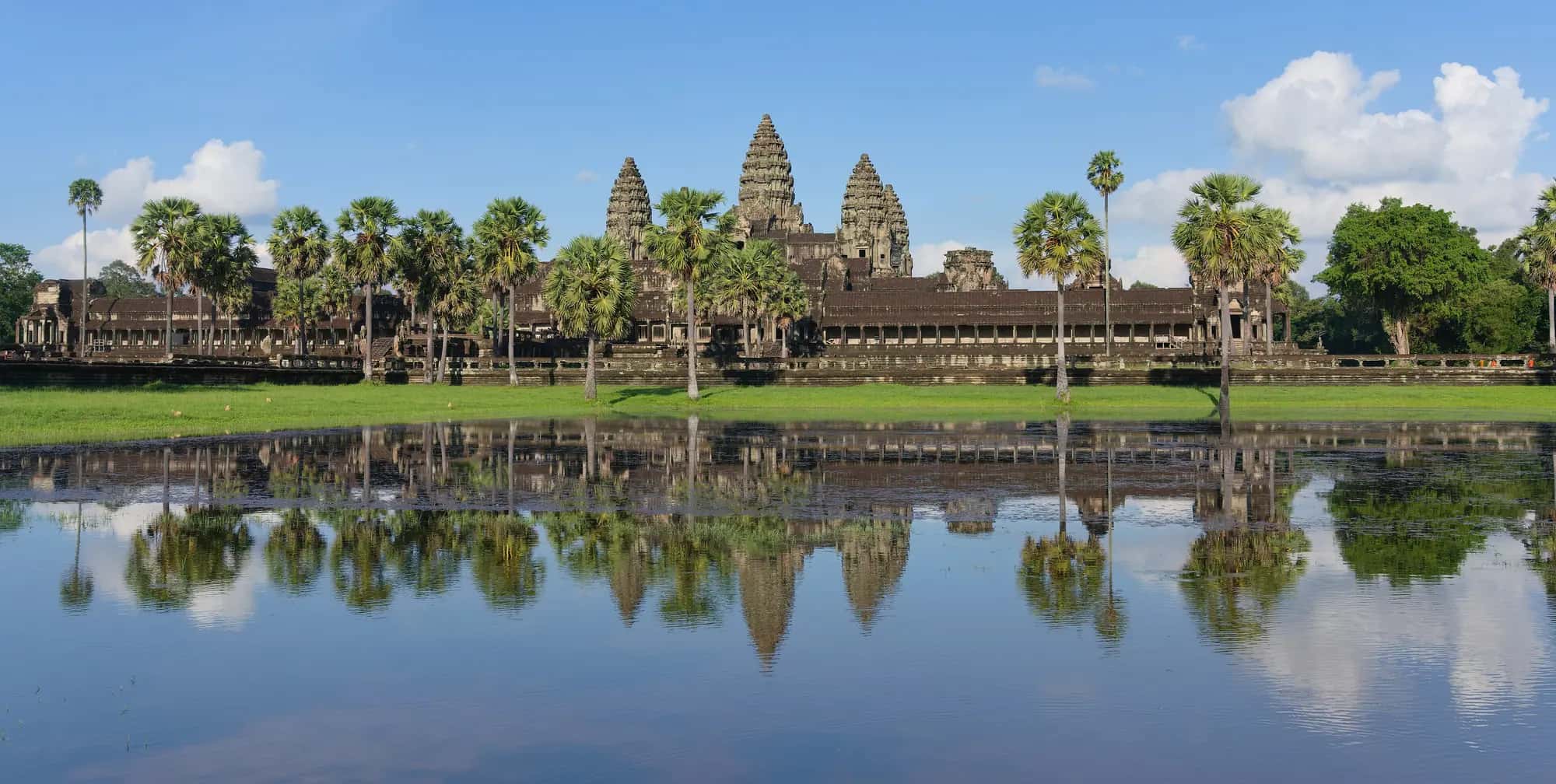
Angkor Wat at sunrise
LandmarkThe world's largest religious monument, built as a Vishnu temple in the 12th century, silhouetted against the dawn.
3–4 hoursAngkor Pass: 1 day USD 37 (₹3,250), 3 days USD 62 (₹5,450), 7 days USD 72 (₹6,350)Leave Siem Reap by 4:45 am. The upper level (Bakan) needs covered shoulders and knees and is closed to children under 12.
- 02
Angkor Thom and the Bayon
LandmarkA walled royal city entered through gates guarded by rows of gods and demons, with more than 200 serene stone faces on the Bayon.
2–3 hoursIncluded in the Angkor PassVisit the Bayon right after sunrise at Angkor Wat, before the tour buses.
- 03
Ta Prohm
LandmarkSilk-cotton and strangler fig roots growing through the galleries. The temple from the Tomb Raider film.
1–1.5 hoursIncluded in the Angkor PassGo early or late in the day; midday tour groups make photos hard.
- 04
Banteay Srei
LandmarkA small pink sandstone temple to Shiva with the finest carvings at Angkor, including Ramayana scenes.
1.5 hours plus travelIncluded in the Angkor PassAbout 37 km from Siem Reap; combine with the Landmine Museum or Kbal Spean.
- 05
Beng Mealea
Day tripA collapsed jungle temple you explore over wooden walkways and fallen blocks, far quieter than the main park.
Half dayAbout USD 5 (₹440) separate ticketAbout 65 km from Siem Reap. Combine with Phnom Kulen or the Roluos group.
- 06
Phnom Kulen
NatureA sacred plateau with a waterfall, a reclining Buddha and lingas carved into the riverbed.
Full dayAbout USD 20 (₹1,750) entryThe waterfall is best from August to December, after the rains.
- 07
Tonle Sap floating village
ExperienceStilt houses, floating schools and fishing life on Southeast Asia's largest lake.
Half dayBoat tours USD 20–30 (₹1,750–2,650) per personKompong Phluk is less commercial than Chong Kneas. Avoid donation scams selling rice for orphanages.
- 08
Phare, the Cambodian Circus
ShowAcrobatics and theatre by graduates of a Battambang arts school. Energetic and family-friendly.
1 hourAbout USD 20–40 (₹1,750–3,500)Book a day ahead in peak season.
- 09
Pub Street and Angkor Night Market
LeisureSiem Reap's evening hub for food, foot massages and souvenir shopping, with several Indian restaurants nearby.
EveningFreeBargain at the night market; start at about half the asking price.
- 10
Royal Palace and Silver Pagoda, Phnom Penh
LandmarkThe king's residence and a pagoda floored with silver tiles, holding an emerald Buddha.
1.5–2 hoursAbout USD 10 (₹880)Closed around midday; cover shoulders and knees.
- 11
Tuol Sleng and Choeung Ek
HistoryThe Khmer Rouge prison and the killing fields memorial. Difficult, but essential to understanding modern Cambodia.
Half dayAbout USD 5–10 (₹440–880) each with audio guideNot suitable for young children. The audio guide at Choeung Ek is excellent.
- 12
Apsara dance dinner show
ShowClassical Khmer dance with buffet dinner, a gentle evening after a temple day.
2 hoursUSD 15–30 (₹1,300–2,650)Buffets usually include vegetarian dishes; confirm when booking.
What should you not miss in Cambodia?
For most Indian travellers, Cambodia means Angkor. The temple park outside Siem Reap covers about 400 sq km and has more than a thousand temples and ruins, and the big four are Angkor Wat, the Bayon in Angkor Thom, Ta Prohm and Banteay Srei. Many Angkor temples were built as Hindu shrines to Vishnu and Shiva, and you will recognise scenes from the Ramayana and the churning of the ocean of milk on the walls.
Which Angkor Pass should you buy?
| Pass | Price | Best for |
|---|---|---|
| 1 day | USD 37 (about ₹3,250) | Angkor Wat, Bayon and Ta Prohm only |
| 3 days | USD 62 (about ₹5,450) | Most visitors; adds Banteay Srei and outer temples |
| 7 days | USD 72 (about ₹6,350) | Photographers and history enthusiasts |
Buy only from Angkor Enterprise's official ticket centre or website. Children under 12 enter free with their passport. Validity windows for multi-day passes have changed before, so check the current rules when you buy.
How do you get around Angkor?
Hire a tuk-tuk for the day for about USD 15–25, or an air-conditioned car for USD 35–55, which is worth it for seniors and in March–May. A licensed guide costs about USD 35–50 a day and brings the carvings to life. Bicycles and e-bikes suit fit travellers in the cool months.
Is Phnom Penh worth adding?
Yes, for a day or two. The Royal Palace and the National Museum are worth seeing, and the Tuol Sleng and Choeung Ek memorials explain the country's recent history. It is about 45 minutes by air or six hours by road from Siem Reap.
US dollars are used everywhere alongside the Cambodian riel. Carry clean, untorn small notes; damaged bills are often refused.
Plan your route with our 5-day Cambodia itinerary and budget with the Cambodia trip cost. Check the best time to visit Cambodia and the Cambodia visa guide before booking.
Frequently asked questions
How many days do you need for Angkor Wat?
What is the dress code at Angkor Wat?
Is Cambodia safe for Indian tourists?
How we checked this page
Last reviewed
Written and fact-checked by the Elitech Travels editorial desk in New Delhi, drawing on our consultants' day-to-day booking work and the official sources below. Rules, fares and fees change — always confirm anything critical with the issuing authority before you travel. Our editorial policy.