Quick answer
Spend three nights in Siem Reap and one in Phnom Penh. Use a three-day Angkor Pass for sunrise at Angkor Wat, the Bayon and Ta Prohm, then Banteay Srei and a Tonle Sap floating village. Fly to Phnom Penh for the Royal Palace and the genocide memorials before heading home. Mid-range land costs start around ₹32,000 per person.
The route
- Kolkata or Bangkok
- Siem Reap
- Angkor
- Tonle Sap
- Phnom Penh
- home
Day-by-day plan
- 1
Day 1
Arrive in Siem Reap
Morning: Land at Siem Reap–Angkor International Airport, about an hour's drive from town. Fill in the free e-Arrival card before you fly.
Afternoon: Check in and rest. In the late afternoon, buy a three-day pass at the Angkor ticket centre; passes bought late in the day usually allow sunset entry that evening.
Evening: Sunset at Pre Rup or Phnom Bakheng, then dinner near Pub Street.
Stay: Siem Reap (near the river or Wat Bo)
IndiGo flies direct from Kolkata to Siem Reap three times a week. From other cities, connect via Bangkok, Kuala Lumpur or Singapore.
- 2
Day 2
Angkor Wat sunrise, the Bayon and Ta Prohm
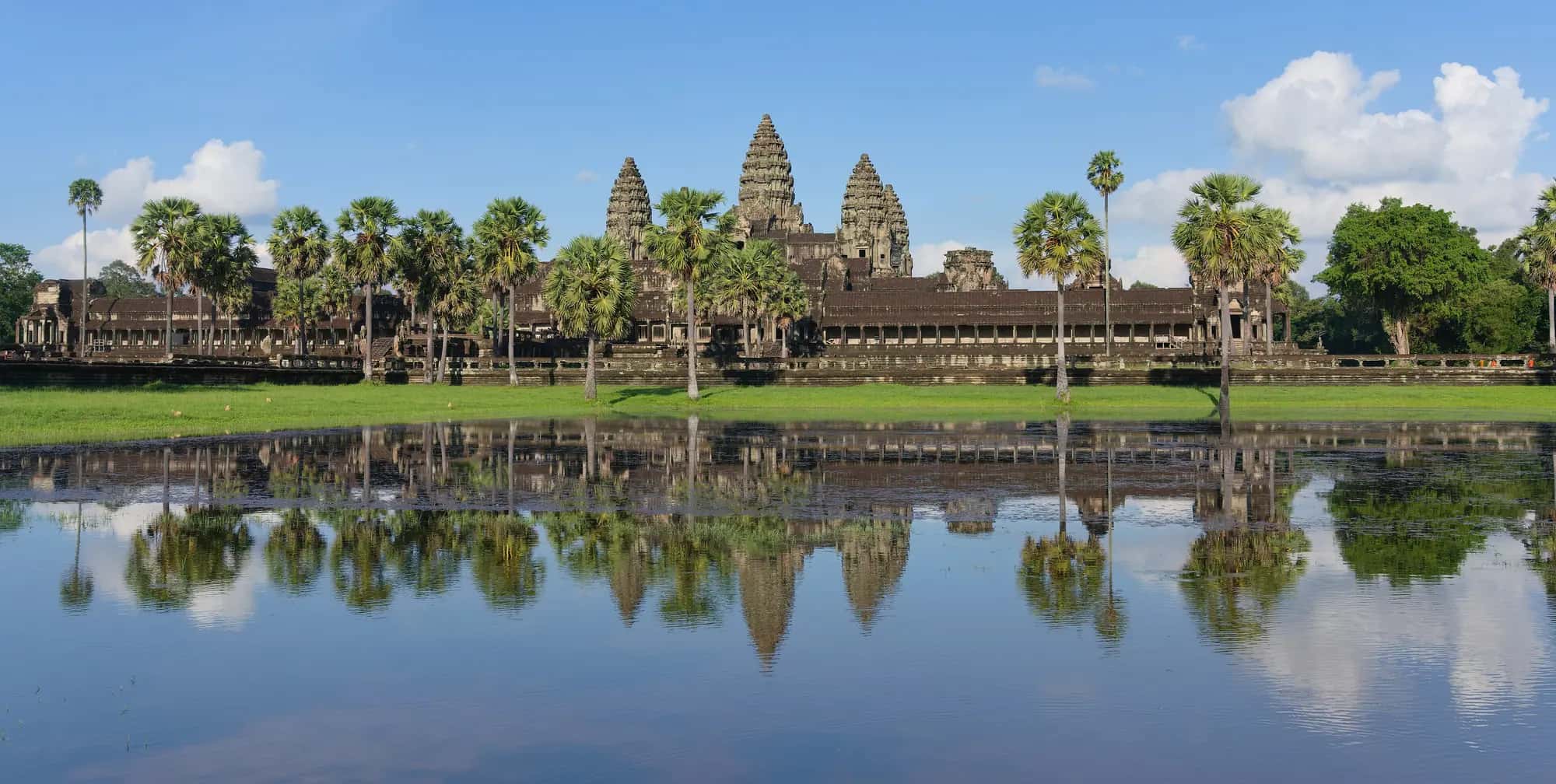
Morning: Leave at 4:45 am for sunrise at Angkor Wat, then explore its galleries and bas-reliefs before breakfast.
Afternoon: Angkor Thom's South Gate, the Bayon's stone faces, the Terrace of the Elephants and Ta Prohm. Back to the hotel by 2 pm.
Evening: Phare, the Cambodian Circus, or an Apsara dance dinner show.
Stay: Siem Reap
Hire a licensed guide for this day. The carvings make far more sense with someone explaining them.
- 3
Day 3
Banteay Srei and Tonle Sap
Morning: Drive about 45 minutes to Banteay Srei for its pink sandstone carvings, stopping at Banteay Samre on the way back.
Afternoon: Boat trip to the Kompong Phluk stilt village on the Tonle Sap lake, timed for sunset on the water.
Evening: Angkor Night Market and a foot massage.
Stay: Siem Reap
Prefer more temples? Swap Tonle Sap for Beng Mealea, which needs a separate ticket.
- 4
Day 4
Fly to Phnom Penh
Morning: Flight to Phnom Penh, about 50 minutes, or a six-hour drive.
Afternoon: Royal Palace and Silver Pagoda after it reopens at 2 pm, then the National Museum next door.
Evening: Sunset cruise where the Tonle Sap meets the Mekong, and dinner on Sisowath Quay.
Stay: Phnom Penh (Riverside)
- 5
Day 5
History, markets and fly home
Morning: Tuol Sleng Genocide Museum, then Choeung Ek with its audio guide.
Afternoon: Russian Market or Central Market for silk, kramas and pepper from Kampot.
Evening: Transfer to Techo International Airport for your flight home.
The genocide memorials are distressing. Families with young children can visit Wat Phnom and the Central Market instead.
Who is this Cambodia plan for?
It suits travellers who want Angkor properly, not as a rushed day trip, plus a taste of the capital. Many Indian visitors find Angkor deeply familiar: its temples were built for Vishnu and Shiva, and the walls carry scenes from the Ramayana and the Mahabharata. Five days also works as an add-on to a Thailand or Vietnam holiday, since Siem Reap and Phnom Penh connect easily by air to Bangkok and Ho Chi Minh City.
How do you get there from India?
IndiGo resumed its Kolkata–Siem Reap non-stop on 1 October 2026, flying three times a week. From Delhi, Mumbai, Bengaluru and Chennai, the usual route is one stop via Bangkok, Kuala Lumpur or Singapore. Land crossings from Thailand have been disrupted since 2025, so we plan flights rather than overland transfers.
What does it cost?
The ₹32,000 per person land cost assumes twin sharing in 4★ hotels with breakfast, private airport transfers, the three-day Angkor Pass at USD 62, a car and licensed guide for two temple days, the Tonle Sap boat, Phare tickets and the domestic flight. The visa, most meals and international flights are extra. See our Cambodia trip cost for full budgets.
Cambodia's e-visa costs about USD 30–36 (₹2,650–3,200) and takes around three working days. Apply only on the official site; details are on our Cambodia visa guide.
Check the best time to visit Cambodia to avoid the April heat, browse more ideas in things to do in Cambodia, and read our Cambodia food guide for vegetarian options.
Frequently asked questions
Is 5 days enough for Cambodia?
Can I combine Cambodia with Thailand or Vietnam?
Do I need a guide at Angkor?
How we checked this page
Last reviewed
Written and fact-checked by the Elitech Travels editorial desk in New Delhi, drawing on our consultants' day-to-day booking work and the official sources below. Rules, fares and fees change — always confirm anything critical with the issuing authority before you travel. Our editorial policy.