Our verdict
Choose Meghalaya for waterfalls, living root bridges, caves and Dawki's clear river with no altitude risk; 5 nights start around ₹19,000 per person. Choose Sikkim for snow-capped peaks, high lakes at 3,750 m and monasteries, from about ₹18,000 for 5 nights. Meghalaya suits fit travellers who like walking; Sikkim suits those who want snow and big mountain views.
Side by side
| Factor | Meghalaya | Sikkim |
|---|---|---|
| Best months | October to April; Dawki clearest November–March | March–May and October–December |
| Getting there | Fly to Guwahati, then about 3 h to Shillong | Fly to Bagdogra, then 4–5 h to Gangtok |
| Starting land cost | 5N from ₹19,000 per person | 5N from ₹18,000 per person |
| Altitude | Shillong about 1,500 m; no altitude risk | Day trips to 3,750–4,310 m |
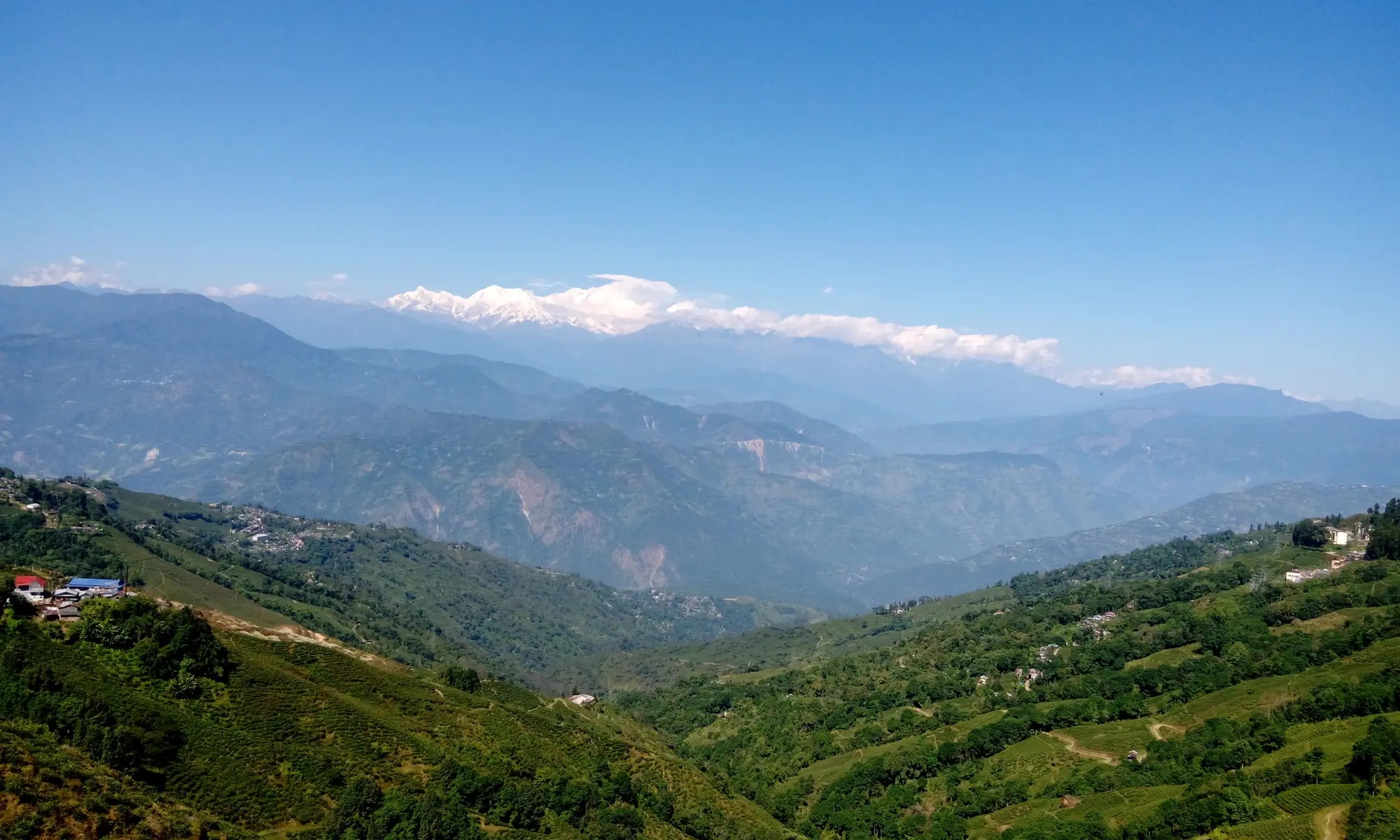
| Landscape | Waterfalls, canyons, caves, root bridges | Kanchenjunga views, glacial lakes, snow |
| Snow | None | Tsomgo, Nathula and Zero Point in winter and spring |
| Physical effort | Nongriat root bridge: about 3,000 steps down and back up | Little walking; long drives instead |
| Monsoon | Among the wettest places on earth; falls at full power June–September | Landslides close roads June–September |
| Food | Khasi food is pork-heavy; vegetarian easy only in Shillong | Momos and thukpa; vegetarian easy |
| Crowds | Dawki and Sohra busy on weekends | Tsomgo and MG Marg busy in peak season |
| Permits | None for Indian tourists | Required for Nathula and North Sikkim |
| Adventure | Caving, canyon walks, kayaking at Dawki, treks | Multi-day treks, Teesta rafting |
Which one is for you?
Choose Meghalaya if…
- You want waterfalls, caves and living root bridges rather than snow
- Someone in your group is worried about altitude
- You're fit, enjoy walking and don't mind 3,000 steps
- You'd like to add Kaziranga or Guwahati to the same trip
Choose Sikkim if…
- Snow, high lakes and Kanchenjunga views are what you want
- You prefer driving to walking and want easy vegetarian food
- You'd like monasteries such as Rumtek and a pedestrian town centre in Gangtok
- You want to add Darjeeling to the same trip
Two very different hill trips
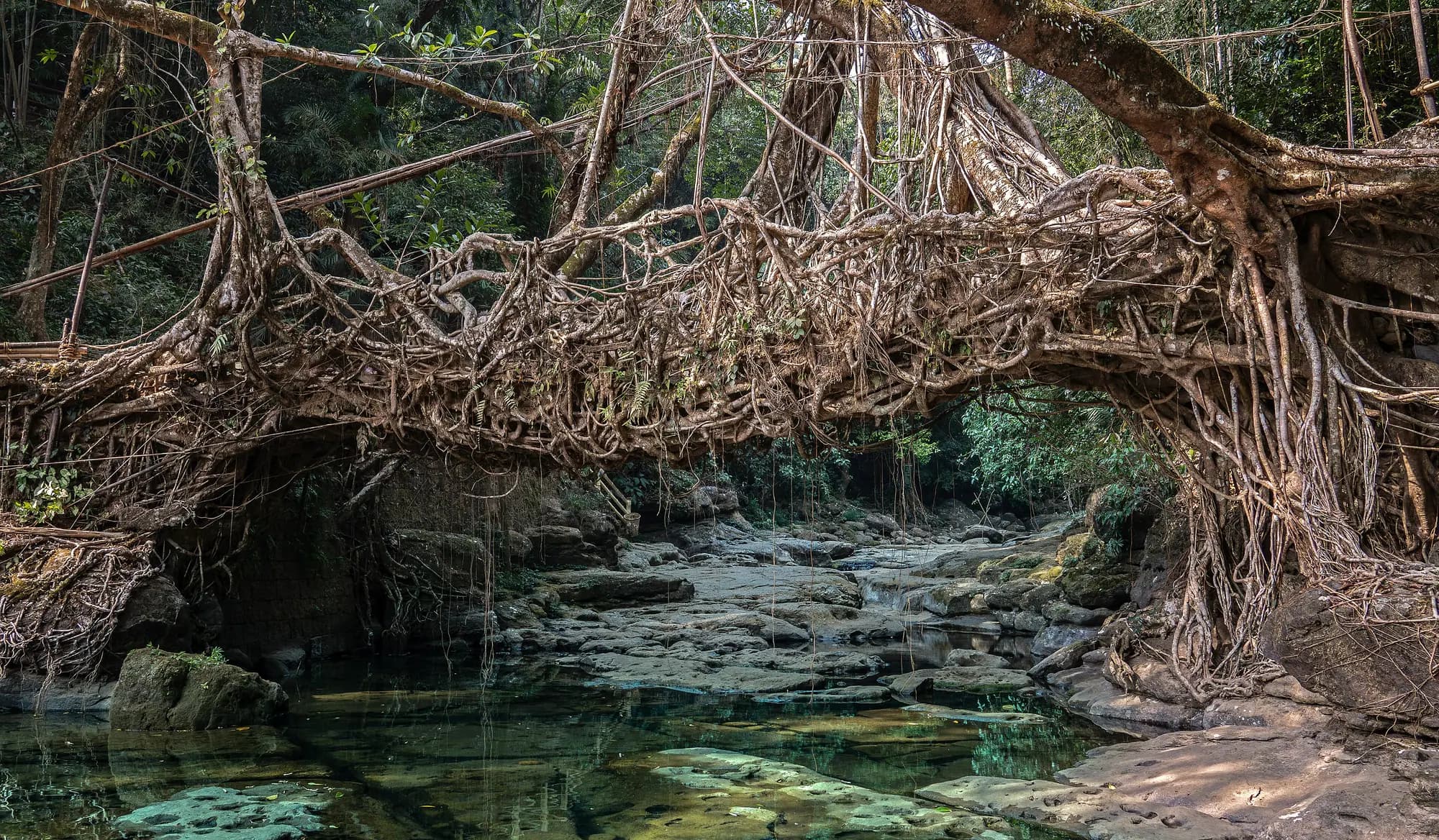
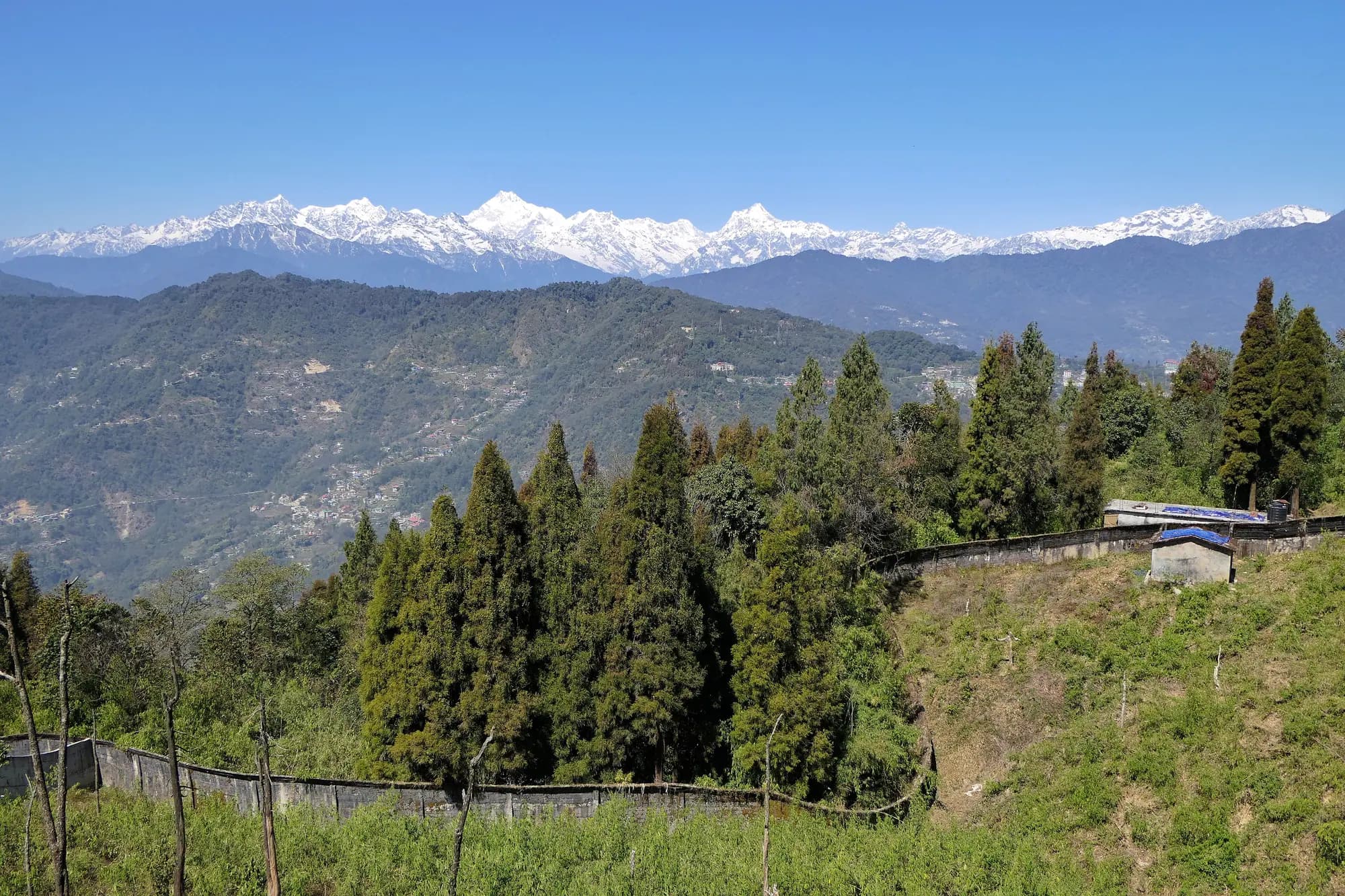
Meghalaya is a plateau state of rain, rivers and limestone. Its highlights are low-altitude and walking-based: living root bridges, plunge waterfalls around Sohra (Cherrapunji), caves at Mawsmai, and the clear Umngot river at Dawki. Sikkim is high Himalaya: Kanchenjunga views, glacial lakes and passes above 4,000 m, mostly seen from a car window and on short walks.
Getting there and cost
For Meghalaya, fly to Guwahati, about 2 hours 30 minutes from Delhi, and drive about three hours to Shillong; Shillong's own airport has few flights. A 5-night trip covering Shillong, Sohra, Mawlynnong and Dawki with a car starts around ₹19,000 per person, twin sharing. For Sikkim, fly to Bagdogra and drive 4–5 hours to Gangtok; a 5-night Gangtok and Lachung trip starts around ₹18,000. Return flights from Delhi to either gateway typically cost ₹8,000–16,000. Costs are similar; the experience isn't. See the Meghalaya trip cost and Sikkim trip cost.
Effort and altitude
Meghalaya asks for legs; Sikkim asks for lungs. The trek to the double-decker root bridge at Nongriat is about 3,000 steps down and the same back up, typically a 4–5 hour round trip. Sohra's viewpoints and the Laitlum canyon edge also involve steps. There's no altitude risk anywhere.
In Sikkim, Tsomgo Lake (3,750 m), Nathula (4,310 m) and Zero Point are long, cold day trips at real altitude. You won't walk much, but headaches and breathlessness are common, and children and older travellers need care. Permits for Nathula and North Sikkim come through registered operators.
Weather
Sohra and nearby Mawsynram are among the wettest places on earth. From June to September the waterfalls are at their most powerful, but roads are slippery and views are often lost in cloud. October to April is the safer window, and Dawki's water is clearest from November to March. Sikkim is best in March–May and October–December; the monsoon brings landslides, especially in North Sikkim. Details on when to visit Meghalaya.
Food and comfort
Gangtok has a wide range of hotels and easy vegetarian food. Meghalaya's Khasi cuisine is pork-heavy, and outside Shillong vegetarian choice drops to dal, rice and instant noodles. Village homestays near Mawlynnong and Nongriat are basic.
Who should go where
Choose Meghalaya if your group is fit, likes walking and wants green, wet landscapes without altitude. Choose Sikkim if snow and big mountain views matter most and you'd rather sit in a car than climb stairs. Pair Meghalaya with Kaziranga, or Sikkim with Darjeeling, for a longer trip; both feature in our India tour packages.
Frequently asked questions
Is Meghalaya or Sikkim better for a family trip?
How hard is the trek to the double-decker living root bridge?
Can I see snow in Meghalaya?
Which is better in the monsoon, Meghalaya or Sikkim?
Do I need a permit to visit Meghalaya?
How we checked this page
Last reviewed
Written and fact-checked by the Elitech Travels editorial desk in New Delhi, drawing on our consultants' day-to-day booking work and the official sources below. Rules, fares and fees change — always confirm anything critical with the issuing authority before you travel. Our editorial policy.