Quick answer
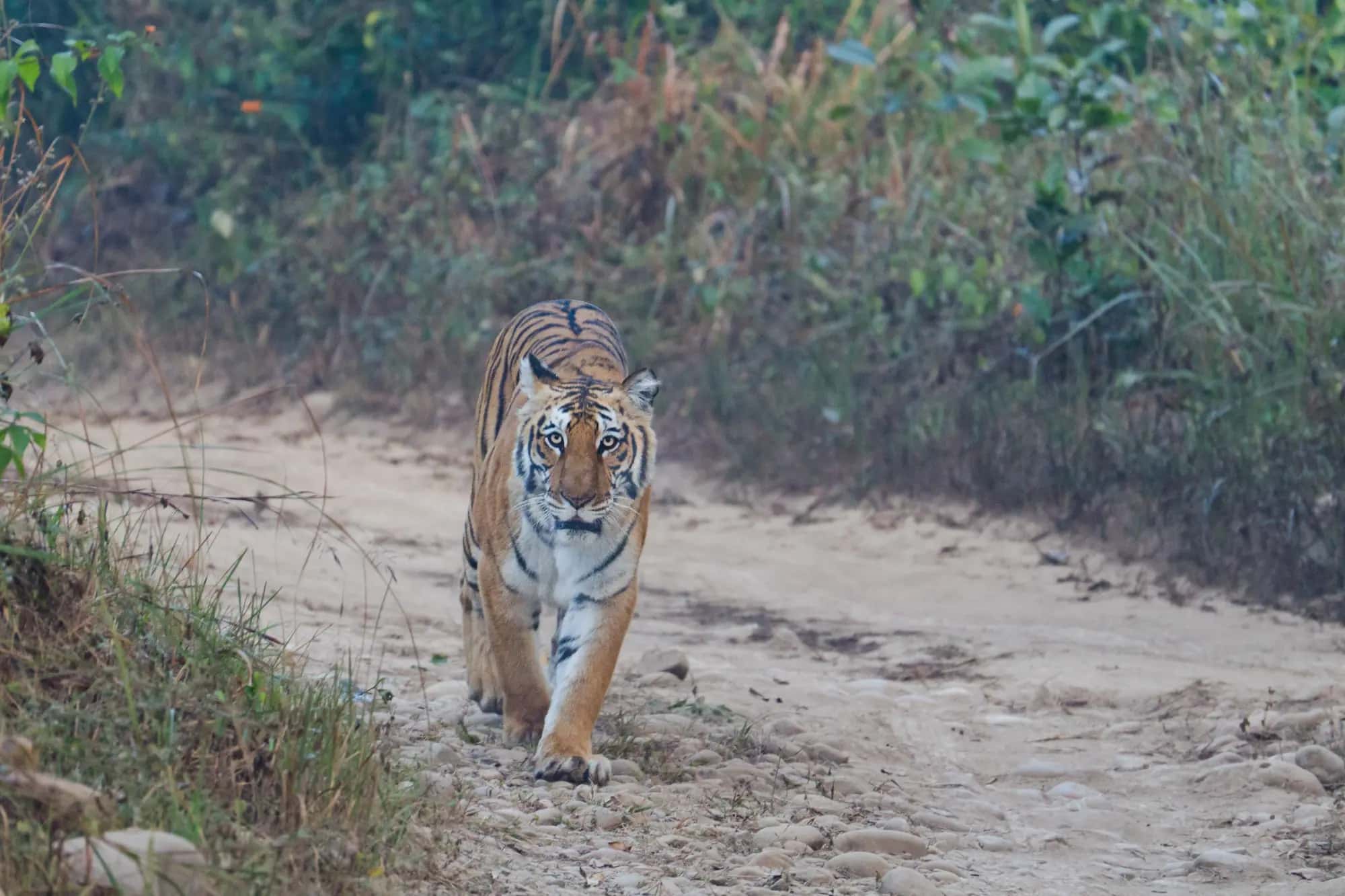
The best time to visit Jim Corbett is mid-November to June, when all core zones are open. March to May gives the best tiger odds because the forest is dry and animals gather at water, but it is hot. November to February is cooler and great for birds. From July to September only Jhirna and Dhela usually stay open.
Month-by-month at a glance
- Jan21°Good
- Feb24°Best
- Mar29°Best
- Apr35°Best
- May39°Good
- Jun38°Fair
- Jul33°Avoid
- Aug32°Avoid
- Sep32°Fair
- Oct31°Good
- Nov27°Good
- Dec23°Good
Jim Corbett weather, crowds and what to expect
| Month | High / Low | Rain | Crowds | What to expect |
|---|---|---|---|---|
| JanuaryGood | 21° / 7° | 30 mm | medium | Cold, foggy mornings in open jeeps; excellent birding; all main zones open. |
| FebruaryBest | 24° / 9° | 40 mm | medium | Fog lifts, days warm up and the grass begins to thin. |
| MarchBest | 29° / 13° | 30 mm | high | Grass cut and burnt along tracks; Holi weekend fills resorts. |
| AprilBest | 35° / 18° | 15 mm | medium | Dry forest; animals near water; hot by noon. |
| MayGood | 39° / 22° | 40 mm | high | Very hot, but the best odds for tigers near the Ramganga and waterholes. |
| JuneFair | 38° / 25° | 220 mm | medium | Dhikala and Durgadevi close on 15 June; Bijrani and Garjiya by 30 June. |
| JulyAvoid | 33° / 25° | 520 mm | low | Core zones shut for the monsoon; Jhirna and Dhela open weather permitting. |
| AugustAvoid | 32° / 24° | 480 mm | low | Monsoon closure, flooded streams, leeches. |
| SeptemberFair | 32° / 22° | 270 mm | low | Mostly closed; green resorts at monsoon rates. |
| OctoberGood | 31° / 16° | 40 mm | medium | Bijrani and Garjiya reopen on 15 October; tall grass makes sightings harder. |
| NovemberGood | 27° / 11° | 5 mm | medium | Dhikala and Durgadevi reopen on 15 November; pleasant weather. |
| DecemberGood | 23° / 7° | 10 mm | high | Christmas and New Year rush; safari permits sell out weeks ahead. |
Long-term monthly averages. Individual years vary — check a forecast in the week before you travel.
Festivals and events in Jim Corbett
15 October
Bijrani and Garjiya zones open
First core-area safaris of the season; grass still tall.
15 November
Dhikala and Durgadevi zones open
Dhikala night stays sell out quickly once booking opens.
About 45 days ahead (Indian nationals)
Safari booking window
Permits are released online on the official Corbett portal; weekends and holidays go first.
15 June (Dhikala, Durgadevi); 30 June (Bijrani, Garjiya)
Core zones close
Dates are set by the reserve and can shift with early rain.
March and national holidays
Holi and long weekends
Resorts on the Ramnagar–Ranikhet road fill; book safaris and rooms together.
When is the best time to visit Jim Corbett?
Go between mid-November and June, when every core zone is open. Within that window, choose by what matters more to you: comfort or tiger odds.
- November to February: cool days, cold foggy mornings, superb birding, tall grass that hides animals.
- March to May: the forest dries out, grass along the tracks is cut, and tigers, elephants and deer come to the Ramganga and waterholes. Odds are best, but May afternoons touch 39–40°C.
- June: still open until mid-month for Dhikala and Durgadevi and until the end of the month for Bijrani and Garjiya, with pre-monsoon storms.
Which Corbett zones are open in which months?
| Zone | Usual season | Notes |
|---|---|---|
| Dhikala | 15 Nov–15 Jun | Jeep safaris need a night stay inside; canter for day visitors |
| Bijrani | 15 Oct–30 Jun | Closest core zone to Ramnagar |
| Garjiya | 15 Oct–30 Jun | Smaller zone near the Garjiya temple |
| Durgadevi | 15 Nov–15 Jun | Hilly, good for birds and the Ramganga |
| Jhirna | All year | Open in the monsoon, weather permitting |
| Dhela | All year | Good fallback when Bijrani sells out |
Dates are set by the reserve and can move with early or late rain.
Is Corbett worth visiting in the monsoon?
Only for the resort and the river. The core zones close, Jhirna and Dhela open on dry days, and sightings are poor in dense green cover. The upside is low room rates.
How early should I book?
Safari permits for Indian nationals open about 45 days ahead on the official Corbett portal and sell out fast for weekends, Christmas, Holi and Diwali. Dhikala rooms go first. Book safaris before you book flights or trains.
On a winter safari, carry a woollen cap, gloves and a blanket. Open jeeps at 6.30 am in January feel close to freezing.
Plan the safari mix with things to do in Jim Corbett, our 3-day Corbett itinerary and where to stay in Jim Corbett. Nainital is a short drive and pairs well in October–November; see the Nainital best-time guide.
Frequently asked questions
Which month gives the best chance of seeing a tiger in Corbett?
Is Jim Corbett open in July and August?
When does Dhikala zone open?
Is winter a good time for Corbett?
How we checked this page
Last reviewed
Written and fact-checked by the Elitech Travels editorial desk in New Delhi, drawing on our consultants' day-to-day booking work and the official sources below. Rules, fares and fees change — always confirm anything critical with the issuing authority before you travel. Our editorial policy.